
- September 18, 2021
- One Comment
Replacing the flimsy insoles of your cycling shoes with cycling sport-specific inserts or footbeds may be the answer to your pedaling pain problems!
Like a mechanic whose car leaks oil or the handyman with a front door falling off its hinges, I’m not always the best patient. When I notice pain while riding or stiffness in a new and unexpected area, my initial course of action denies its presence and hopes it will go away.
A classic case of “Do as I say, and not as I do” that questions the rationale and credibility of someone who portends to advise to the contrary. Guilty as charged with no suitable defense!
Neither the mechanic’s car nor the handyman’s door is going to fix itself. When I noticed pain in the back of my knee one day while riding, I dismissed it as nothing that more riding wouldn’t cure. The pain persisted and traveled to the outside of my knee, making it clear my leg wasn’t going to heal itself.
To their detriment, cyclists can be masters at pain procrastination. Still, they are experts in being keenly aware of listening to their body and reacting to even the slightest deviation from optimal.
Do as I say and not as I do!
Having consulted patients and written on the subject various times, it should have been evident that the pain in my knee may very likely be due to an improper bike fit. Specifically, a saddle that is too high or back or a crank that is too long.
However, the only evident truth was that my bike hadn’t been taken off the trainer in over a year, and I had changed nothing during that time. That included the cycling footbeds I have had in my favorite cycling shoes for years.
Then it dawned on me! It wasn’t my saddle height that got higher, but rather the distance between it and the pedals that got longer! How could that be, you ask? The answer may be found in those worn-out insoles!
Old Insoles Can Cause Poor Leg Alignment
When weight or force is applied upon an unsupported arch, the bones and supporting structures often cannot withstand the stress. Your arch will flatten, which in turn causes the bones of your lower leg to rotate inward, and in effect, your leg gets shorter.
This compounds the problem by making the distance between the saddle and the pedals even greater.
Inward rotation causes a lengthening of the iliotibial (IT) band, resulting in inflammation where it connects to the outside of your knee and pain behind the knee from repetitive reaching for the pedals.
Flat Feet are a Common Problem
Whether the price I have to pay for standing upright or a genetic gift from my parents fished from our shallow gene pool, I have identified that the root of the undeniable foot pain I experience is the flawed structure of my feet, commonly known as ‘fallen arches’ or ‘flat feet.’
Once acknowledged, the situation has been corrected by replacing the insoles of my work shoes with an over-the-counter pair of orthotics (a shoe insert that supports the abnormal movement of your foot).
When I developed similar symptoms while riding, I corrected them in much the same way.
The Theory Behind the Mind-Body Benefits of Cycling Footbeds
Every time we take a step, our arches absorb the impact and adapt to the ground beneath our feet to keep us upright. When our heels strike the ground, it signals our hip, knee, and ankle muscles to stabilize our leg. When this fails to happen, it creates the ‘shortened leg’ scenario described earlier.
When we are cycling, we lack the stimulus of the heel strike, which occurs when walking, but there is a tremendous load applied to the foot. The result is a weak or non-existent signal between our brain and muscles. This deficiency causes a failure of the muscles to fire in proper sequence when pedaling, and an inward collapse of the foot results.
The appropriate cycling footbeds can improve the brain’s awareness of where our feet are positioned in space, a concept known as proprioception. By providing feedback to the nerves on the bottom of our feet, our brain is stimulated to signal the muscles making our leg stable. Proprioceptive awareness counteracts the tendency for our arches to compress, our leg to turn inward and may allow for more stable power transfer.
The Theory Behind the Stabilizing Benefits of Cycling Footbeds
Much less of a leap of faith, the benefits of providing stabilizing support through footbeds are more visually logical. A well-fitted footbed improves contact across the entire base of the foot and spreads the load over more surface area, thereby relieving pressure points.
The insole serves as a mechanical block of arch collapse, and through the support, provides the stability you may need.
Cycling Footbed Facts
- The ‘stock’ insoles of cycling shoes are usually just a flimsy cover for the inside of the shoe, which provides little to no support.
- Your foot can swell as much as a half shoe size during a long ride, especially during a hot day, which can affect the fit of your shoes and insoles.
- If a cyclist wears orthotics in their daily life, that does not mean they will need them while riding or that the type will be the same, but the chances are good.
- When your foot isn’t supported in your cycling shoe, it may be moving, which can have a negative effect on the float of your pedals, which are designed to be the primary source of leg rotation when pedaling.
- It is recommended that you replace your insoles every season. However, that can change depending upon the type and skill level of the rider and the materials used to fabricate the footbeds.
The Debate Surrounding the Usage of Cycling Footbeds
The foot is one of the most intricate structures of the body, and its proper function relies on the synchronous interplay of a host of variables. It is likely for this reason that cycling insoles cause great debate in the bike-fitting world.
Cyclists have used cycling insoles for many reasons, including injury prevention, increasing power, improved comfort, and increased pedaling efficiency. The theory supporting the utilization of footbeds to improve lower limb alignment seems sound, but the scientific evidence doesn’t necessarily support this claim.
In a systematic review of the topic published in the Journal of Foot and Ankle Research, the authors reported that despite subject-specific biomechanical effects, the utilization of cycling insoles provided no benefits in power output, oxygen consumption, or even comfort.
Due to the scarcity of research, the study’s authors recommended that bike fitters and clinicians take an individualized approach for managing injury and correcting alignment issues. This option is of particular significance for cyclists exhibiting hip and knee issues until there is further evidence to the contrary.
Conclusion: What Works For Me May Not Work For You
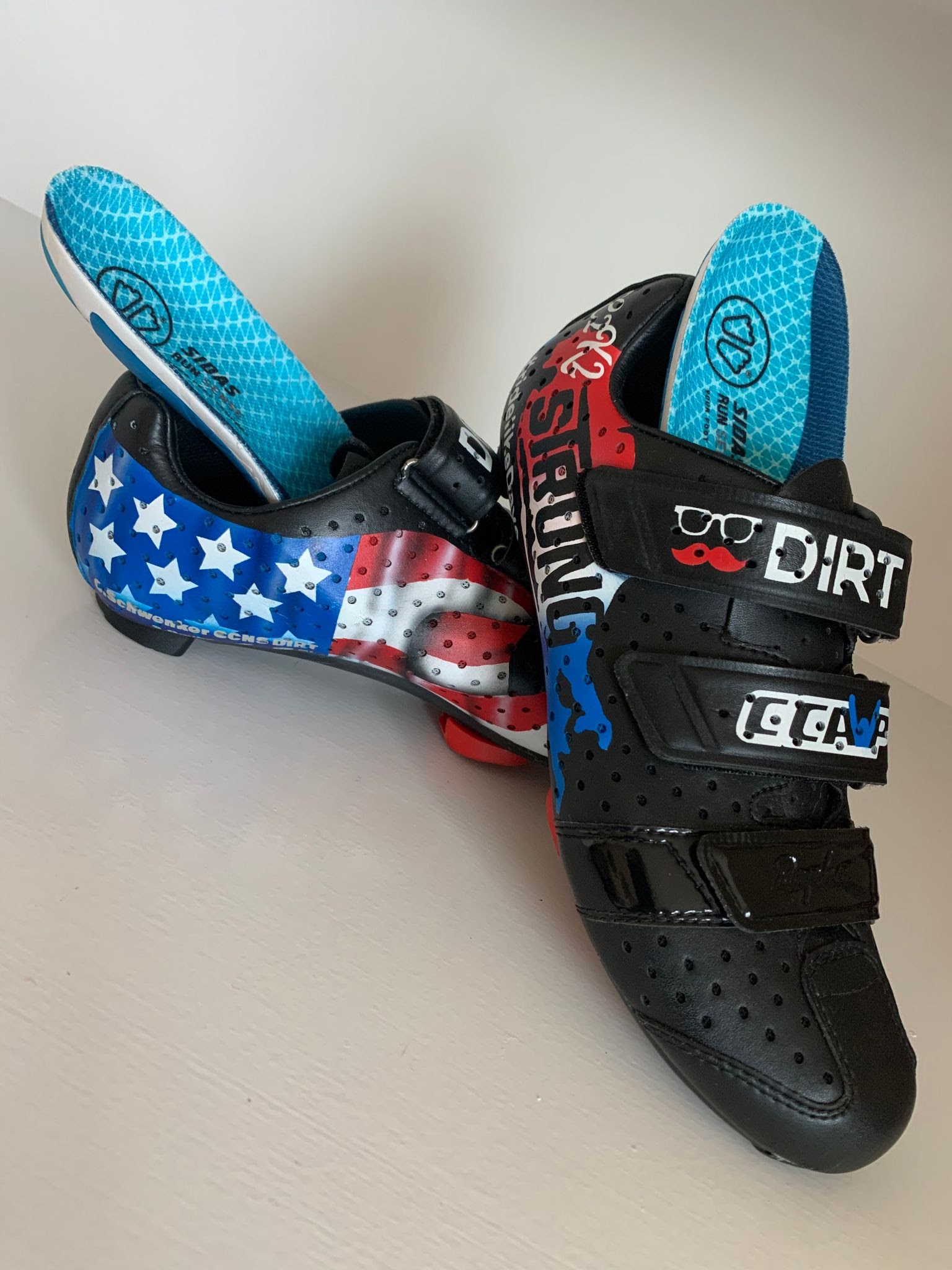
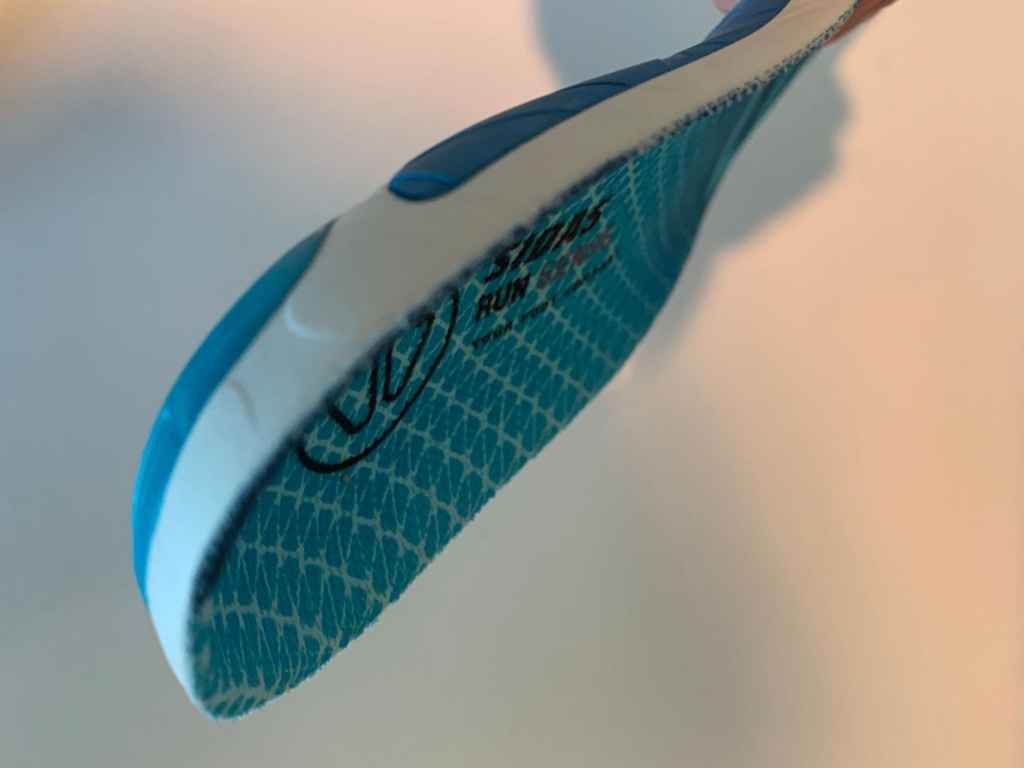
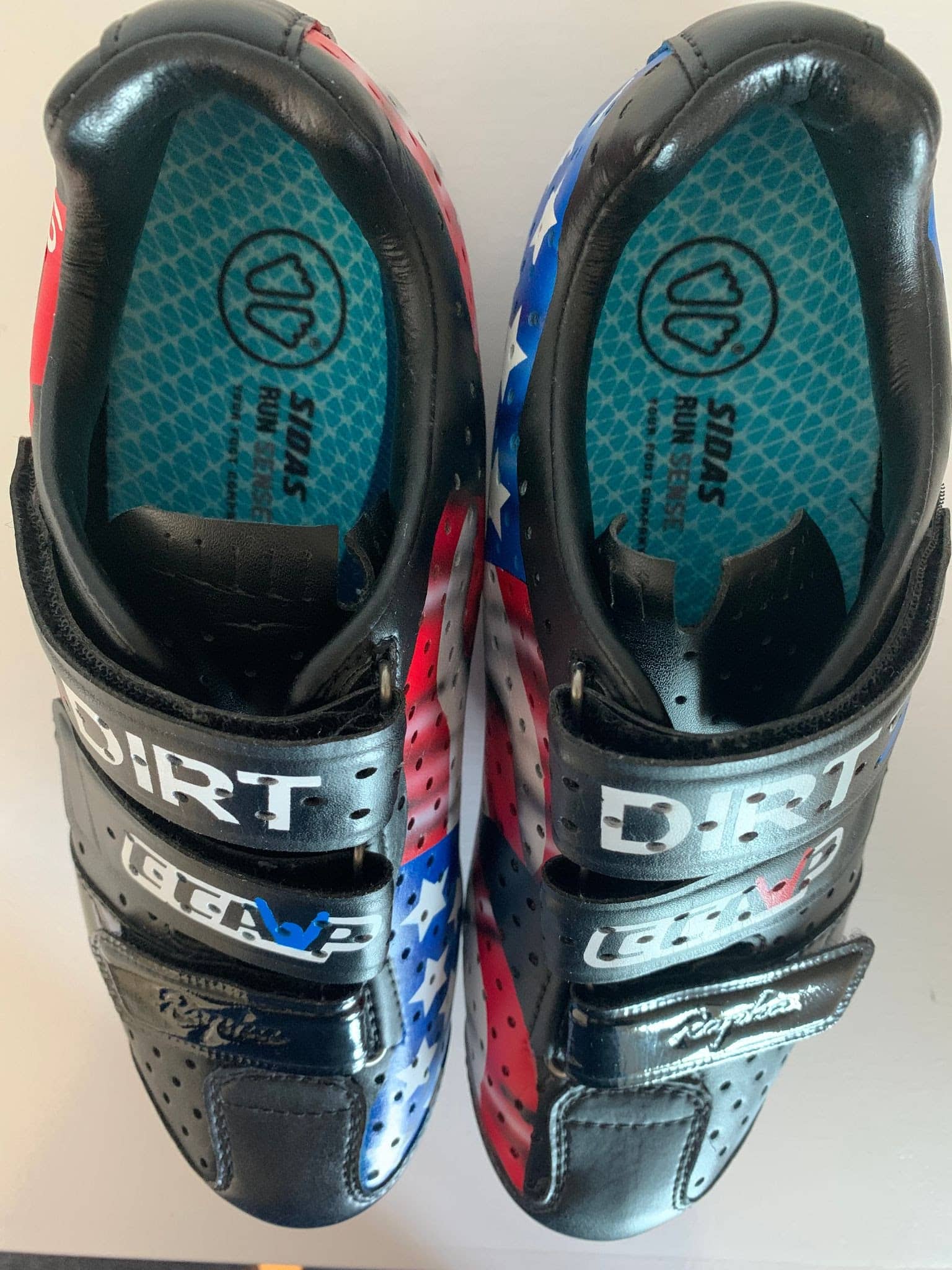
After much trial and error over the years, I have determined that the insoles which work best for me are the cycling-specific insoles designed for low arches produced by Sidas. They provide the right combination of support and comfort, which my feet need, in a lightweight and breathable insole. It seems like they are durable, too.
Don’t take my word for it, though. The usage of cycling insoles in itself is very individualized, and each person’s foot is unique. Your cycling footbed choice should also be.
The key takeaway is that if you are experiencing discomfort in your legs while cycling and have exhausted all possible causes, sport-specific insoles are a potential solution.
I use these cycling shoe inserts- https://amzn.to/3hhDIbt
Your thoughts?
Do you use cycling-specific insoles or footbeds? What is your experience? Comment below! Your fellow virtual cyclists want to know.
Check out this Virtual Case Study if you are suffering from ankle and foot pain when you ride!
To subscribe to the Zommunique and receive more informative and entertaining articles like this one sent directly to your inbox, click here!
Semi-retired after more than 20 years as the owner and director of a private Orthopedic Physical Therapy practice, Chris now enjoys the freedom to dedicate himself to his passions—virtual cycling and writing.
Driven to give back to the sport that has enriched his life with countless experiences and relationships, he founded a non-profit organization, TheDIRTDadFund. In the summer of 2022, he rode 3,900 miles from San Francisco to his “Gain Cave” on Long Island, New York, raising support for his charity.
His passion for cycling shines through in his writing, which has been featured in prominent publications like Cycling Weekly, Cycling News, road.cc, Zwift Insider, Endurance.biz, and Bicycling. In 2024, he was on-site in Abu Dhabi, covering the first live, in-person UCI Cycling Esports World Championship.
His contributions to cycling esports have not gone unnoticed, with his work cited in multiple research papers exploring this evolving discipline. He sits alongside esteemed esports scientists as a member of the Virtual Sports Research Network and contributes to groundbreaking research exploring the new frontier of virtual physical sport. Chris co-hosts The Virtual Velo Podcast, too.


[…] cycling shoes, of course! Judging from the response I received to this recent post on Cycling-Specific Shoe Inserts featuring pictures of my customs, I’m not the only […]