

For the 2024/25 racing season, Zwift is launching an initiative to recognize elite-level racers with an in game "verified" badge and bottom-up development.
“I think you could probably argue that it’s overdue,” Zwift concurs, “It’s also a significant recognition that these racers and teams are an important part of our community and contribute a lot to support racing on the platform.”
It’s a long-held belief by many members of the competitive Zwift community, such as cycling esports pioneer, Coalition Alpha founder and director Rhys Howell, who told The Zommunique, “More effort could be put into elevating the true champions of the platforms.”
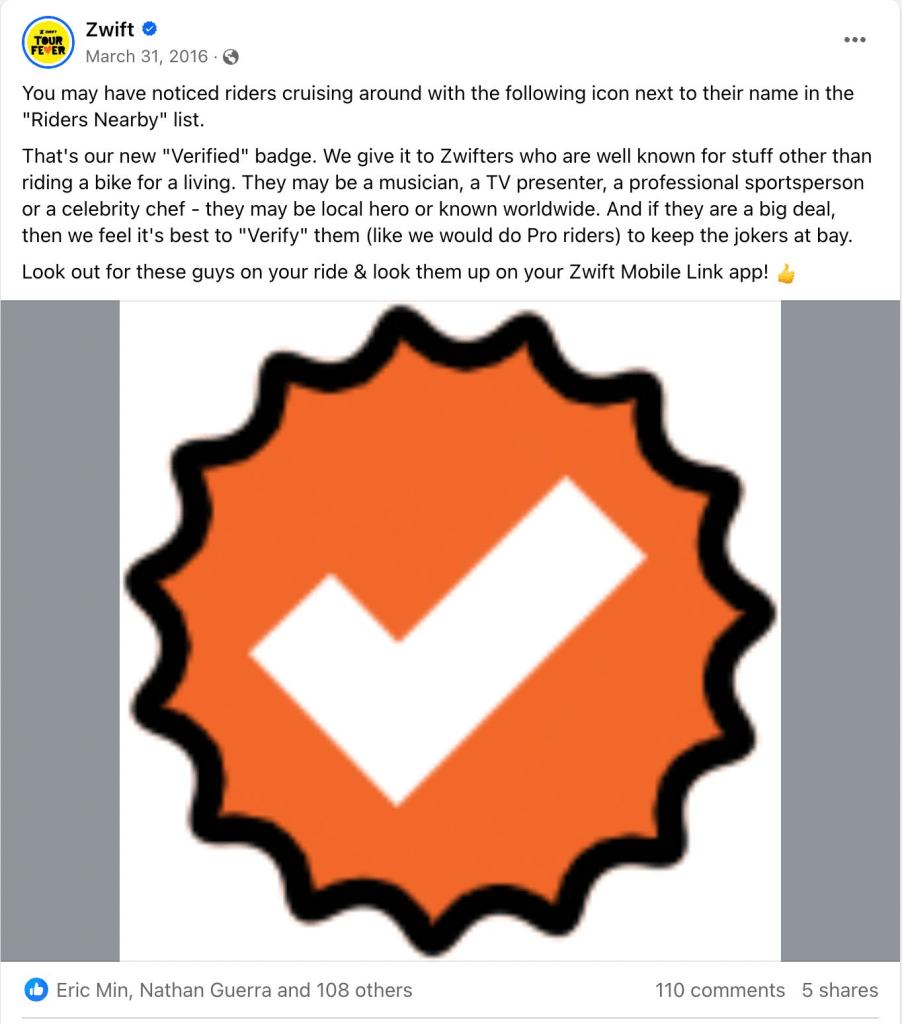
Zwift introduced the “Verified” badge program in 2016. Until now, the platform’s community elite racers were not eligible for recognition.
For years, there’s been a palpable and growing sentiment within the community questioning the decision to feature a real-world road racing professional with limited ties to the community as the platform’s face. Many believe that the spotlight should instead shine on the passionate and motivated homegrown esports talents who have been doing the heavy lifting to promote this evolving sport—a sport that originated on the Zwift platform.
The shift is a long-awaited activation of Zwift’s philosophy that all levels of competition on the platform are intertwined, as reflected in the Zwift Elite Community Racing Season 2024/25 Race Book, which was sent to elite Zwift racers and teams on June 20th.
CEO Eric Min’s comments on a recent episode of The Fit File podcast underscore Zwift’s commitment to a bottom-up growth strategy for cycling esports. He stated, “Racing is something that we’re leaning into from a community standpoint more than at the elite level,” highlighting the focus on grassroots development.
Zwift emphasizes the importance of developing the sport from the bottom-up, as this approach fosters growth and helps build a fanbase. The broad philosophy is the foundation of what they term “elite community racing.” Zwift is committed to ensuring that elite racing is not viewed as a separate entity but as the pinnacle of the sport, offering a clear pathway from community levels to elite competition. In cycling terms, this strategy could be described as a ‘trickle-up’ investment, where resources invested at the community level eventually ascend to support elite racing.
“The “Elite Community” is an important reference for us,” says Zwift.
“As we’ve mentioned previously, we believe it important that we grow this sport from the ground up and create pathways to the top. Important for the Zwift World Series is that open qualification pathway, which allows any talented community racer to earn a spot in the series and qualify for the Zwift Games.”
According to Zwift, the revamped structure, featuring a regular season and Championship, a consistent schedule, a defined pathway from community to elite, smaller race fields, and new qualification criteria, provides increased incentives and more ways to help the stars shine.
“Firstly, these racers deserve recognition for what they do. Secondly, in order to grow the fanbase, high-profile riders are necessary to build a narrative that spectators can get behind—every successful sport has superstars that transcend the sport and attract new audiences—both to watch and to participate.”
Recognition for Elite Community Zwift Racers In Game
In 2024, Zwift is launching a new system to recognize elite-level racers within the game. Zwift will award racers who meet the eligibility criteria a “verified” badge. This badge, typically reserved for “individuals with notable achievements—athletically or professionally,” will now also acknowledge elite community racers under this definition.
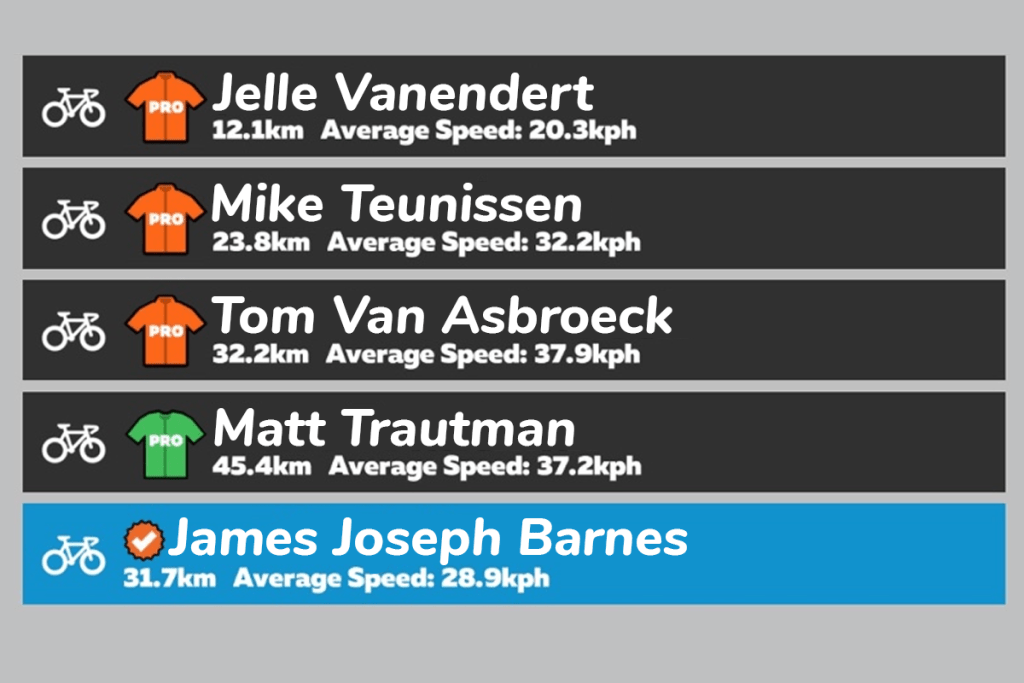
Once Zwift awards the badge, it will appear as a tick symbol next to the racer’s name on their in-game profile and the riders nearby list on the right-hand side of the screen, signaling to others that they are riding alongside an elite racer.
Through this initiative and the other significant changes to the 2024/25 elite community racing season detailed in the race book, “Zwift wants to better support the sport through compelling communication and storytelling, and more broadcasts throughout the year.”
Eligibility Criteria For Recognition
Racers who have completed three elite-level races over the past 12 months will qualify for a verified badge in game. For the 2023/24 season, these elite races include the Zwift Grand Prix and Zwift Games 2024. For the 2024/25 season, they include the Zwift World Series (including Open Qualifiers) and Zwift Games 2025.
For the 2023/24 season, Zwift is finalizing the list of qualifying riders, and all in-game badges will be awarded by August 1st, 2024. For subsequent elite community racing seasons, riders will retain this designation for one year. An evaluation process will occur annually in April to update the list.
“We believe that it will help grow the sport by establishing that narrative. Riders and teams will find it easier to build audiences, which is not only good for their profile, but can also help attract new sponsors,” Zwift adds.
A vocal proponent of the initiative, prolific winner, and recognizable Zwift talent, NeXT eSport p/b Enshored’s James Barnes applauds the move.
“It is always great to celebrate the successes of those in our community and reward their hard work. This verified badge does not make you better than anyone in the community but shows your contribution towards the growth of sport and community. We are celebrating and recognizing each individual’s achievements.”
Many would like enhanced acknowledgment, such as a unique badge style or a color change, as Barnes suggested while co-hosting The Wrap Podcast on March 23rd.
“At this time, I think the verification badge feels right. We will, of course, monitor and see whether any further distinction may be required,” says Zwift.
Semi-retired after more than 20 years as the owner and director of a private Orthopedic Physical Therapy practice, Chris now enjoys the freedom to dedicate himself to his passions—virtual cycling and writing.
Driven to give back to the sport that has enriched his life with countless experiences and relationships, he founded a non-profit organization, TheDIRTDadFund. In the summer of 2022, he rode 3,900 miles from San Francisco to his “Gain Cave” on Long Island, New York, raising support for his charity.
His passion for cycling shines through in his writing, which has been featured in prominent publications like Cycling Weekly, Cycling News, road.cc, Zwift Insider, Endurance.biz, and Bicycling. In 2024, he was on-site in Abu Dhabi, covering the first live, in-person UCI Cycling Esports World Championship.
His contributions to cycling esports have not gone unnoticed, with his work cited in multiple research papers exploring this evolving discipline. He sits alongside esteemed esports scientists as a member of the Virtual Sports Research Network and contributes to groundbreaking research exploring the new frontier of virtual physical sport. Chris co-hosts The Virtual Velo Podcast, too.

How do I see if I qualify for this?
The eligibility criteria and timeline are cited in the article. Thank you for your question and good luck, Tim.
I think this is a great move, but do A+ rider work any harder than D cat. Everyone throughout the categories give their all in these events and I feel that that should be recognised also… provided they qualify their performance and weight etc.
I understand your point and appreciate the comment. However, I’ve seen the amount of time and effort it takes to prepare to race at the elite level and I don’t think I could do it. It’s a lot! I think Zwift got this one right. They are pros!