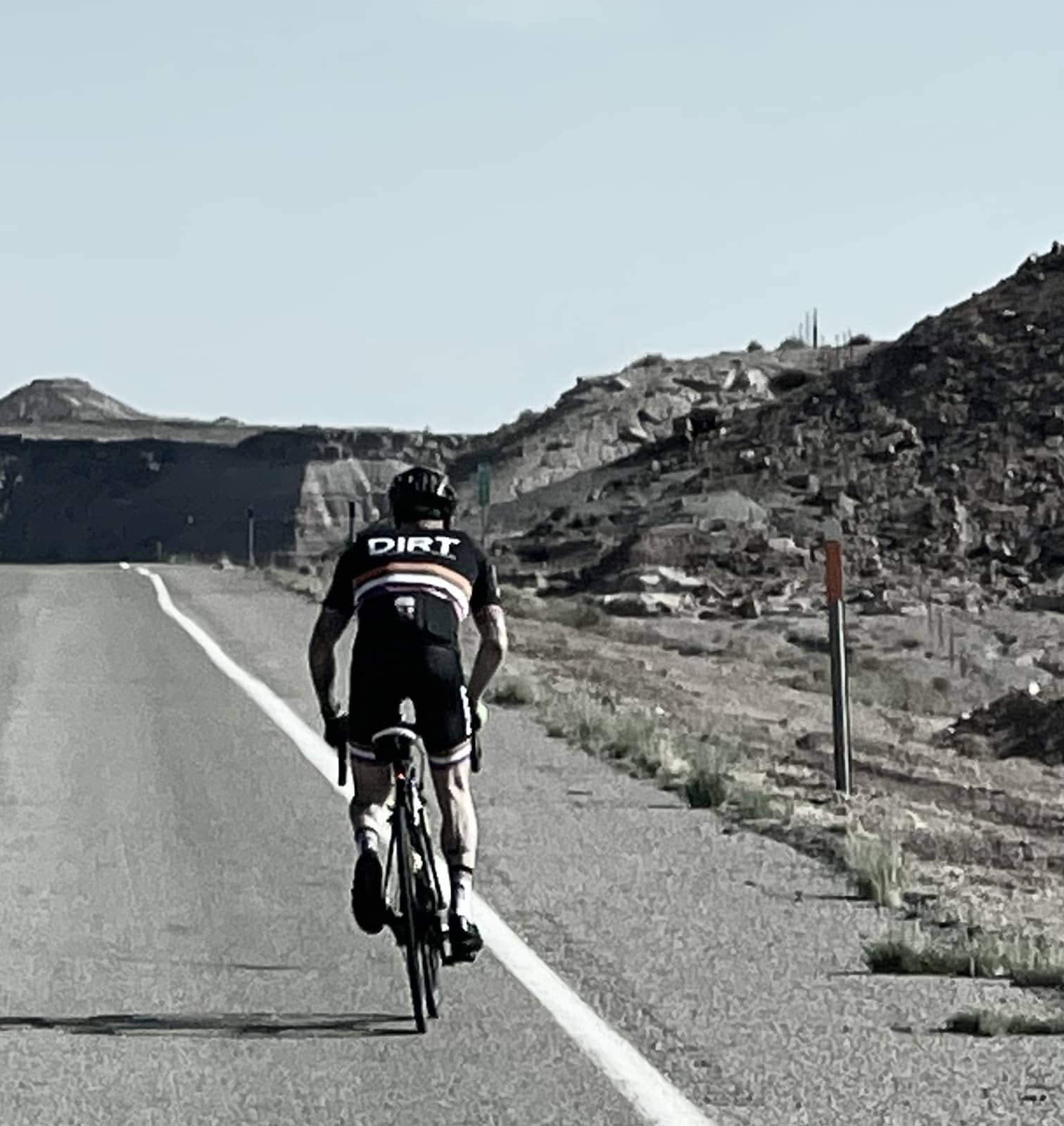
"The only online sport requiring physical effort to gamble," says an esports gambling researcher, has some health professionals concerned.
Believe it or not, not everyone possesses the intrinsic drive to exercise. While dedicated cyclists may find it natural to prioritize physical activity, many casual exercisers struggle to justify the time, fit it into their busy schedules, or summon the energy needed to engage in dreaded workouts.
According to industry trend website Zippia, the fitness industry anticipates growth of over 170 percent by 2028 to almost $435 billion, with online fitness experiencing a 33 percent increase yearly. The stark reality is that much of that cash will be spent persuading someone to do something they don’t desire. For many cyclists, riding the turbo fits firmly in that category of necessary evils.
Virtual cycling platform Zwift has revolutionized the way cyclists consume indoor training by gamifying the experience, and millions of users are reaping the health benefits. Yearly tours of the Zwift metaverse, such as the Tour of Watopia and Tour of Zwift, attract thousands of users per ride in search of a fun training atmosphere and in-game incentives, including kit unlocks, route and achievement badges, and other digital bling to accessorize their avatars.
The Zwift Big Spin Has the Virtual Cycling World Abuzz
They had never seen anything like The Zwift Big Spin before, and it shows, with swarms of users showing up for each of the hourly non-competitive group rides and setting the virtual cycling world abuzz. Zwift wanted to design a distinct tour for non-competitive users to complement the Zwift Games series of races held concurrently on the platform.
“The idea for The Big Spin was to create a fun game-show-style experience where Zwifters are rewarded for every ride they complete. The Big Spin Wheel allowed us to be creative with a host of new game unlocks, all unique to the Zwift Big Spin,” explains Zwift’s PR director, Chris Snook.
The event, which began on March 11, 2024, offers four week-long stages set in different regions of the Zwift map (Makuri, London, New York, and France), followed by two make-up weeks. Unlike the previous popular Zwift tours of a similar format, all participants completing a stage get a chance at a unique incentive never before seen in such an event.
Zwifters will recognize the Big Wheel from atop the Alpe Du Zwift, positioned to randomly reward riders with in-game swag for cresting the ascent of the platform’s realistic rendition of Alpe d’Huez, resplendent with its 21 hairpin turns and rare glimpses of the elusive Yeti.
For the Big Spin, Snook explains, “We took the same concept to reward Zwifters for each ride completed. Each stage offers eight rewards—1 Tier 1 (lowest probability), 5 Tier 2 (medium probability), and 2 Tier 3 (high probability). It is the first time we’ve offered Zwifters the chance to collect a host of limited edition unlocks purely based on chance, so it gives Zwifters motivation to return and complete stages more than once.”
The Zwift Big Spin is Attracting More Riders and Keeps Them Coming Back
Some many more than once. The top twenty participants spun the Big Wheel over 850 times during the first two weeks, with the grand prize going to the one who completed the event almost 70 times.
A significantly greater number of Zwifters participated in the Big Spin overall than in the Zwift Games and for a considerably longer time per day. The number of users finishing multiple Big Spin events was almost eight times greater.
Zwifters can’t get enough of the Big Spin, as you can tell by the engagement to a Zwift Facebook group post that received more than 100 comments in two days.
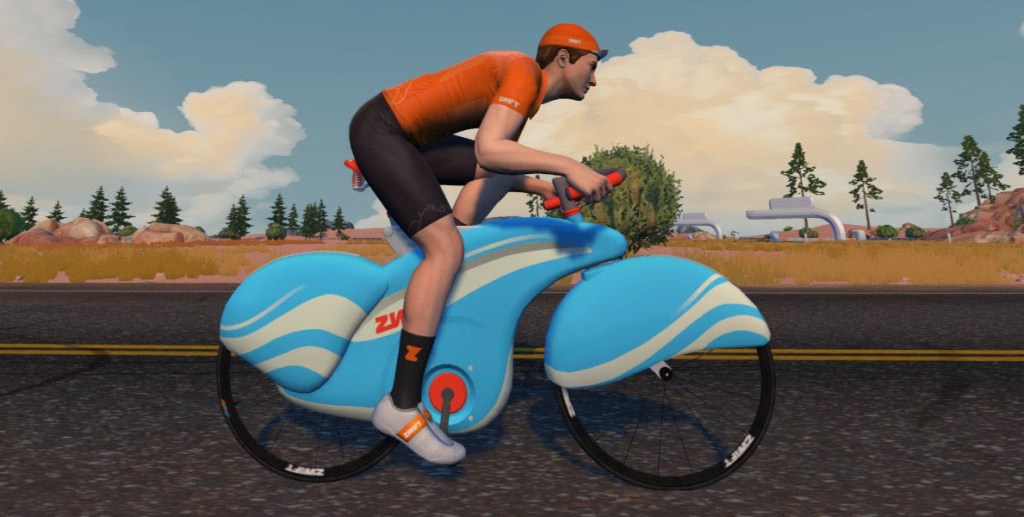
One said, “I was off work, so I did it all day and got 15 spins.” Another shared, “I burned 6,000 calories in two days trying to unlock the bike alone.” While another boasted, “It took me sixteen tries in one week to get the Atomic Cruiser.”
The animated cartoon caricature bikes are in high demand and keep them coming back again and again, whereas Zwifters report receiving more socks, glasses, and hats than they know what to do with. Not that there is anything to do with them at all. Therein lies the mystery of the Big Spin’s allure.
Beauty is in the eye of the beholder, and users pursuing the atomic cruiser may be beholden to motivational forces more powerful than they know.
Intermittent Rewards Design Concept of The Big Spin Concerns Health Professionals
According to Mindful Child & Family Therapy founder Jaclyn Long, “Intermittent rewards are incredibly addictive and can increase the risk of engagement in unhealthy behaviors. In the cycling world, riddled with perfectionists and overachievers, offering intermittent rewards might lead to an increased risk of injuries due to overtraining and the emotional toll that increased pressure and resulting anxiety might put on an already-strained system.”
The unlimited availability and insidious built-in gamified structural elements reinforce habitual behaviors. Introducing rewards conceptually changes the user’s purpose for pedaling from pursuing a healthy lifestyle to the unhealthy quest for intermittent gratification.
B.F. Skinner first described the theory of a “variable schedule of rewards” or “intermittent reinforcement” in the 1950s. His theory has two powerful behavior-modifying benefits.
It leads to more instances of the behavior compared to a set schedule of rewards, and the behaviors are “hard to extinguish,” meaning they persist over time, even if you remove the random reward.
Most Zwifters Don’t See the Harm In It
A Zwifter since 2016 and casual gamer, Shawn McAfee recognized the strategy, and it doesn’t seem to phase him.
Massive multiplayer online games like EverQuest and World of Warcraft drive increased gameplay through rewards from RNGs—random number generators.
In these games, loot tables or boxes are mystery bundles of virtual items that a gamer wins as a reward. The contents allow players to unlock equipment or “skins,” which change the avatar’s appearance or improve performance.
With other in-game incentives, you know what you are achieving, but the contents of a loot box are entirely down to chance. Several countries have banned the use of the video game design concept because it’s believed to expose children to the addictive nature of gambling.
“The Zwift equivalent mirrors this concept, and surprisingly, it took them this long to implement it. Completing the route is akin to slaying a monster and getting a chance at its loot table,” says McAfee.
For Some Healthcare Professionals, the Benefits Outweigh the Risks
Hospitalist, USA Cycling Esports National Age Group Champion, and USAC Esports Committee Member Dr. Jenn Real echoes the pragmatic perspective and the popular sentiment of the larger Zwift community.
“I love the big spin. The randomness keeps it fun and entertaining and provides extra motivation. It kept me on the trainer when I would usually have stopped because I wanted those darn headphones! I don’t really think there’s anything negative about it. Zwift does a great job of keeping otherwise boring training fun.
The psychology of random rewards is fascinating, and it explains the massive success of the big spin compared to other events where there’s a set unlock.”
Licensed Psychologist Lisa Macias, Ph.D., who treats many athletes and addicts, offers a more sobering perspective.
“It’s commonly believed that financial reward is a primary motivator for gambling. Interestingly, dopamine (a neurotransmitter that affects the brain’s reward system associated with pleasure, motivation, and mood) release from gambling is related to the unpredictability of the reward.
For Others, the Potential For Harm Can’t Be Overlooked
Pairing intense physical activity such as biking, which triggers dopamine release with intermittent rewards, may result in excess dopamine. A heightened dopamine reaction to the exercise and gambling stimulus has the potential to create difficulties with impulse control, a driver for addictive, compulsive behaviors.”
The risks of exercise addiction, overreaching, overtraining, and burnout are inherent in the cycling population, especially among indoor cyclists, where the temptation to ride harder and longer is omnipresent.
Leaderboards, ride streaks, leveling up, challenges, sprints, and K/QOM segments, to name a few, all contribute to a competitive environment, amplified by the presence of fellow riders. Research indicates that such a scenario drives individuals to push themselves harder and work longer. The combination can have potentially harmful effects.
In this case, an altered mental state, motivation, and the perceived value of random rewards challenge the hallmarks of an athlete’s training regime—train, recover, supercompensate, and improve.
Dr. Bryce Dyer, co-author of the December 2023 paper An Investigation Into the Attitudes of Virtual Cycling Participants Regarding Avatar Bodyweight Manipulation and Weight Doping detailed in this report, feels that “a certain degree of ethical dialogue is required by the technology creators when introducing such products or initiatives; otherwise, they can unknowingly create what are known as unwanted consequences or “revenge effects.”
There’s a heightened risk with the Big Spin due to an unintended performance-based incentive.
The First Esport Requiring Physical Effort to “Gamble”
Zwifters quickly realized that finishing the event before the thirty-minute late join cutoff time opens up the chance to re-enter the event multiple times, increasing the opportunity to acquire a random reward. It has led to a large group of riders pushing themselves to the limit to complete the approximately 11-mile courses on time, with some participating several times a day.
Dr. Andrew Richardson is a Research Associate at Newcastle University in Gambling Harms, Editor at the International Journal of Esports, and co-author of multiple research papers exploring cheating in cycling esports [CyclingNews, April 12, 2022]. He had this to say about the Zwift Big Spin.
“First, I am always pleased to see new and unique ways to get more people active. We cannot ignore the physical and mental health benefits of exercising at an individual level or with a community of friends.
From my current role, I am unaware of any other online or in-person sport or platform requiring physical effort to “gamble.” This event may be the first esport with some form of physical effort leading to loot boxes, loot crates, or skin style awards for its users.”
Richardson reiterates the physical risks and the potential for harmful habituation, suggesting monitoring to avoid the out-of-control pursuit of “luxury or rare” digital rewards.
“The organizers could cap the number of bets (rides) a user can place to mitigate the likelihood of harm, promote safe fitness practices, and foster harm reduction principles.”
The Zwift Big Spin Encourages Exercise, and That’s Excellent in Moderation and With a Degree of Ethical Dialogue
However, many performance professionals believe anything that encourages exercise, health, and well-being is positive as long as it’s in moderation. As with many addictions, the outcome is largely dependent on the individual’s personality. There will always be outliers and individuals who take things too far, whether willingly or unwittingly.
According to anecdotal reports, a Zwifter has accumulated over 400 in-game jerseys in his virtual garage and logs 1,000km of riding each week to discover unique events for unlocking more. The American Psychiatric Association’s Diagnostic and Statistical Manual of Mental Disorders (DSM-5-TR), utilized by mental health professionals for diagnosing mental disorders, includes descriptions of internet gaming addiction since 2013. Studies indicate a relatively low incidence while acknowledging definition and measurement limitations. Researchers attribute 23 non-violent deaths to Internet Gaming Disorder between 2002 and 2021.
Sport and Exercise Scientist and frequent content contributor Andy Turner acknowledges the balance between risk and reward.
“Some riders feel a pressing need to complete events to unlock new items, sometimes at the cost of training and event performance. While there are personality types for whom this behavior can become detrimental, for the majority, the event serves as an excellent means of increasing activity levels and engagement.”
He’s not the only one. Much to the joy of the majority of users, the team at Zwift and Snook agree.
“We want to continue to keep big Tours feeling fresh, but the reaction to The Zwift Big Spin has been overwhelmingly positive, so watch this space.”
Semi-retired after more than 20 years as the owner and director of a private Orthopedic Physical Therapy practice, Chris now enjoys the freedom to dedicate himself to his passions—virtual cycling and writing.
Driven to give back to the sport that has enriched his life with countless experiences and relationships, he founded a non-profit organization, TheDIRTDadFund. In the summer of 2022, he rode 3,900 miles from San Francisco to his “Gain Cave” on Long Island, New York, raising support for his charity.
His passion for cycling shines through in his writing, which has been featured in prominent publications like Cycling Weekly, Cycling News, road.cc, Zwift Insider, Endurance.biz, and Bicycling. In 2024, he was on-site in Abu Dhabi, covering the first live, in-person UCI Cycling Esports World Championship.
His contributions to cycling esports have not gone unnoticed, with his work cited in multiple research papers exploring this evolving discipline. He sits alongside esteemed esports scientists as a member of the Virtual Sports Research Network and contributes to groundbreaking research exploring the new frontier of virtual physical sport. Chris co-hosts The Virtual Velo Podcast, too.
Interesting article. In phase two of my Zwift life now ( ie doing less than half what I used to as a result of open heart surgery) I can reflect on phase one as having invested myself too heavily…was ‘addicted’.
I now have more time to look at outputs from others and in a small percent of cases I can see issues.
Eg. One who feels need to fly their trainer overseas to not miss out on Zwift km vs chilling and relaxing and in another, the internally generated motivation to rush to level 100 to feel validated by peers.
Gamification has sucked them in.
But for the majority, this is not the same issue….bell curve likely represents well.
I have not spent one drop…I have over 215 million….so items in my garage do not motivate.
I think Zwift is brilliant, huge fan…but there is a small % that it becomes problematic for with their over reliance on reward and gratification.
Is that Zwift’s problem though? They seek to get that middle chunk of the bell curve moving regularly.
Their need is for subscribers to continue, and gain new subscribers. Any business needs sales turnover, and then retention of existing customers.
By rewarding that motivates a chunk of their membership base. For most it is not an issue..but the data on how many rides some have done in the Big Spin is mind blowing and maybe concerning for that person ( but we have no context of that person, continuing patterns of behaviour etc) so too easy to form personal judgements.
Thought provoking again Christopher Schwenker 😊❣️🚴
Thank you for the thoughtful comment, Sharron! I appreciate your support and the insight!