- December 7, 2021
- No Comments
By integrating these simple balance exercises and one piece of equipment into your program, you will combat the loss of balance experienced with age without the need to steady your bike.
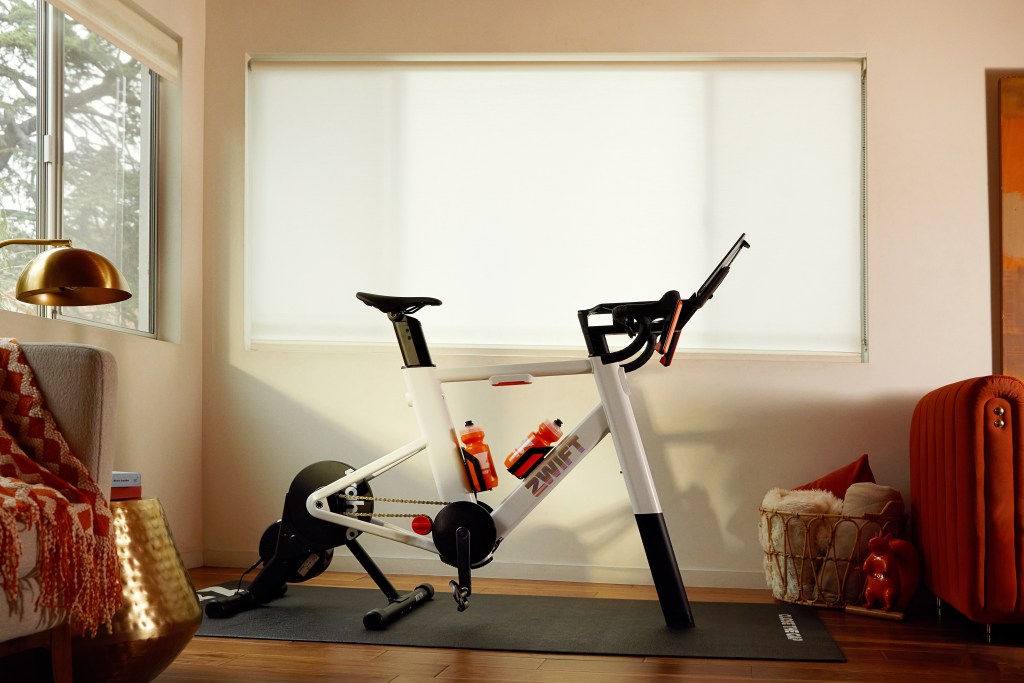
It’s just like riding a bike. Unfortunately, in this crucial instance, it isn’t. Virtual cycling shares many characteristics with traditional riding but differs in a significant way.
You don’t have to balance. Cyclists that spend an extended part of their season training and racing indoors lack the stimulus they receive when maintaining upright while riding.
Yes, you could use a rocker plate. But it isn’t like you will fall over if you decide not to pay attention to your orientation. We need to challenge our postural awareness.
The effect that the lack of stimulation of our balance and postural systems has is profound. Not only on athletic performance but also mental health and general wellness.
What is Balance?
Balance is the ability to keep your body’s center of gravity in its base of support. Simply stated, standing on your own two feet while resisting the forces trying to prevent it.
There are two types of balance, static and dynamic. The ability to maintain upright when stationary is static balance. Dynamic balance is required when we are in motion or changing positions.
Static and dynamic balance results from the coordination of visual, vestibular, and proprioceptive inputs.
The vestibular system is located in the inner ear and provides information about motion, head position, and orientation to our brain. Proprioception is referred to as our “sixth sense” and enables us to judge limb movement and position through receptors located in the muscle, skin, and joints.
We Lose Balance as we Age
An interruption or impaired response from any of the systems can result in a loss of balance. Like the muscle and strength loss described in the article entitled Strength Training is Essential for the Senior Athlete and Masters Cyclist, balance is a critical skill we lose as a normal response to aging.
As we age, we lose balance function through loss of sensory elements, the ability to integrate information and issue motor commands, and because we lose musculoskeletal function. H R Konrad et al. (1999). Moreso, the length of time an aging individual can stand on one leg is a critical indicator of longevity.
Balance is a skill that none of us can afford to lose. One that can be easily maintained by following these easy steps.
The Benefits of Balance Training
Injury Prevention
The ability to react effectively to variations in terrain and rapid changes in position decreases the risk of injury. Anna Brachman et al. (2017)
Stop the Age-Related Loss of Balance
Our ability to balance declines as we get older. If we practice and challenge the systems they will function effectively and negate the effects of age. H R Konrad et al. (1999)
Prevent Falls
When your balance system is working, you adapt to changes in position and adjust to the unexpected rapidly and effectively. By avoiding falls the aging athlete decreases the risk of injury and boosts their confidence. Avril Mansfield et al. (2015)
Improves Awareness of Posture
By enhancing the ability to sense our body position we become more keenly aware of how we hold ourselves. Postural awareness through balance training counteracts the adverse effects of a seated lifestyle. Lindsay J. Distefano et al. (2009)
Athletic Performance is Improved
Balance training improves coordination and agility and facilitates efficient movement patterns making them reflexive. Muscular power is improved by enhancing the nerve connections for a more forceful contraction. Anna Brachman et al. (2017)
Memory and Cognition are Boosted
The findings of this recent study suggest that systematic balance training is capable of enhancing cognitive functions, such as memory, and how the brain processes information about the environment.
Builds Bone Mass
The weight-bearing nature of balance activities provides load-bearing stress to our bones. By stimulating our bones it combats the decrease in bone mass density seen in cyclists. Maria Grazia Beneditti et al. (2018)
Balance Training Program For The Cyclist
I perform the following program weekly as part of a resistance training and maintenance routine. The piece of equipment shown in the exercise description is a Bosu Balance Trainer. It is an essential addition to my Gain Cave. I use it extensively in my Physical Therapy Practice with individuals of all levels of fitness. This is the one I use – https://amzn.to/3ALddC6
1. Squat
While standing and maintaining your balance on an inverted Bosu Ball squat and return to a standing position. Knees should bend in line with the 2nd toe and not pass the front of the foot.
2. Single Leg Stance
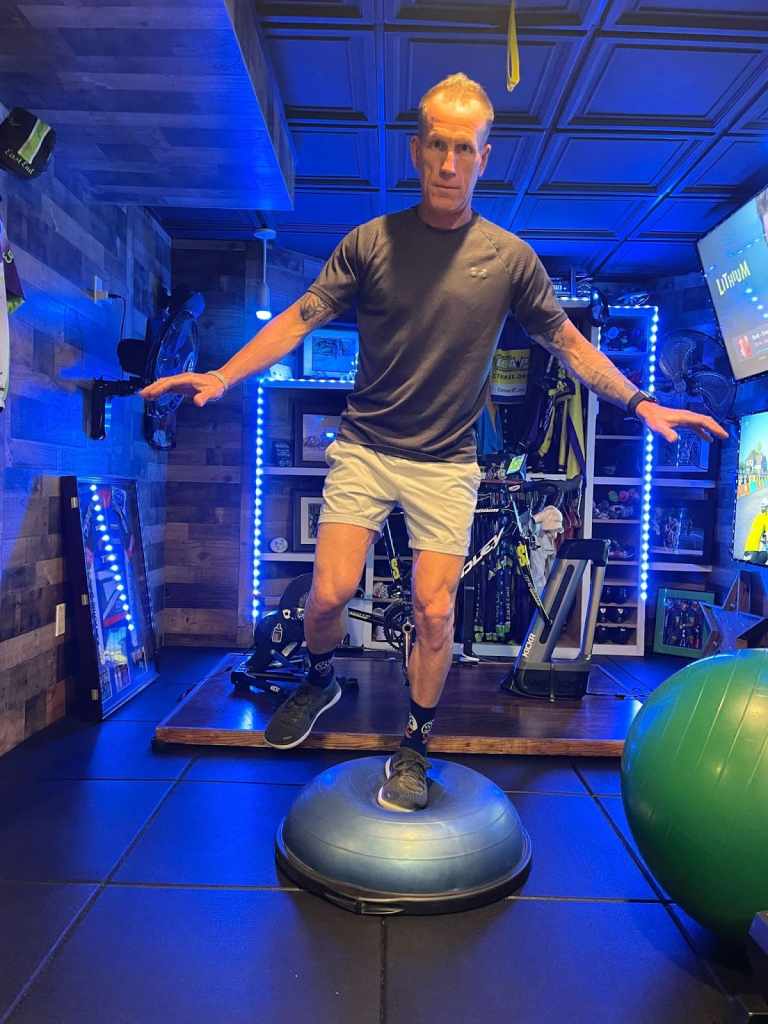
Stand on a Bosu Ball with one leg and maintain your balance. Maintain a slightly bent knee on the stance side.
3. Forward Lunge
While standing on the ground in front of a Bosu Ball, take a step forward placing your foot on the Bosu Ball. Allow your front and back knee to bend as you lower yourself towards the ground. Do not allow your front knee to pass your toes. Return to the original position and then perform with the other leg.
4. Reverse Lunge
While standing on the ground with a Bosu ball behind you, take a backward step placing your foot on the Bosu Ball. Allow your front and back knee bend as you lower yourself towards the ground. Do not allow your front knee to pass your toes.
Then straighten your front knee and rise back up but keep your front foot on the Bosu ball. Next, lower back down again as you bend both knees and raise back up again. Repeat.
5. Lateral Step Up
With the Bosu Ball at your side, side-step up on top of the ball. Then step down the other side and repeat.
6. Single Leg Squat
While standing and balancing on a Bosu Ball with one leg, bend your knee and lower your body towards the ground. Return to a standing position. Your stance knee should bend in line with the 2nd toe and not pass the front of the foot.
Conclusion
Balance training is an integral part of any endurance athlete’s comprehensive strength and conditioning program. The stimulus that balance training provides enhances our general health and improves athletic performance. In addition to slowing the normal deterioration due to aging.
The importance of integrating exercise movements that challenge our balance is more significant for the virtual cyclist. Virtual cycling is just like traditional cycling in many ways, but in the balance category, it falls down short.
Do a few balance exercises to ensure that you won’t, now and in the long ride.
Your thoughts?
Do you include balance exercises in your training plan? What do you do and what do you think? Comment below! Your fellow virtual cyclists want to know.
For more helpful performance tips and exercise programs like this one, visit the Training & Performance page on The ZOM!
To subscribe to the Zommunique and receive more informative and entertaining articles like this one sent directly to your inbox, click here!
Semi-retired after more than 20 years as the owner and director of a private Orthopedic Physical Therapy practice, Chris now enjoys the freedom to dedicate himself to his passions—virtual cycling and writing.
Driven to give back to the sport that has enriched his life with countless experiences and relationships, he founded a non-profit organization, TheDIRTDadFund. In the summer of 2022, he rode 3,900 miles from San Francisco to his “Gain Cave” on Long Island, New York, raising support for his charity.
His passion for cycling shines through in his writing, which has been featured in prominent publications like Cycling Weekly, Cycling News, road.cc, Zwift Insider, Endurance.biz, and Bicycling. In 2024, he was on-site in Abu Dhabi, covering the first live, in-person UCI Cycling Esports World Championship.
His contributions to cycling esports have not gone unnoticed, with his work cited in multiple research papers exploring this evolving discipline. He sits alongside esteemed esports scientists as a member of the Virtual Sports Research Network and contributes to groundbreaking research exploring the new frontier of virtual physical sport. Chris co-hosts The Virtual Velo Podcast, too.