- October 26, 2021
- 2 Comments
Dead Butt Syndrome is a common cycling condition that can be treated and prevented by following these simple steps.
Dead Butt Syndrome (DBS), known clinically as gluteus medius tendinopathy, and often referred to as ‘gluteal amnesia,’ is a common condition amongst cyclists. While I have often been accused of having my head ‘you know where’ during races, that is not quite what I am alluding to here.
When a cyclist spends a prolonged period of time in the saddle, they may develop numbness in the muscles deep to the glutes, which can become stiff, and that soreness travels to the hips, lower back, and knees. Those deep glute muscles essentially ‘shut down’ and forget their main purpose, which is supporting the pelvis and keeping your trunk in proper alignment while pedaling.
As cyclists, we spend a tremendous amount of time with our trunk maintained in a bent forward position, which causes the muscles on the front of our thighs (hip flexors) to tighten, and our glutes to lengthen.
Coupling that with the significant pressure the saddle puts on a localized area, causes the smaller muscle of the buttocks, the gluteus medius, to develop inflammation (tendinitis) and even bursitis (inflammation of a fluid-filled sac that eases movement within the hip joint).
Perhaps most significant for cyclists, however, is the profound weakness associated with DBS. It is believed that the glutes account for more than 25% of our pedaling power, greatest at the top of the pedal stroke as we apply downward force.
Ineffective contraction of the glutes hampers performance, and can also cause the surrounding muscles, in an effort to compensate for the weakness, to fatigue more rapidly.
With proper treatment and exercise, you can revive your dead butt and jog its memory. Here is a Four-Step approach to show you how.
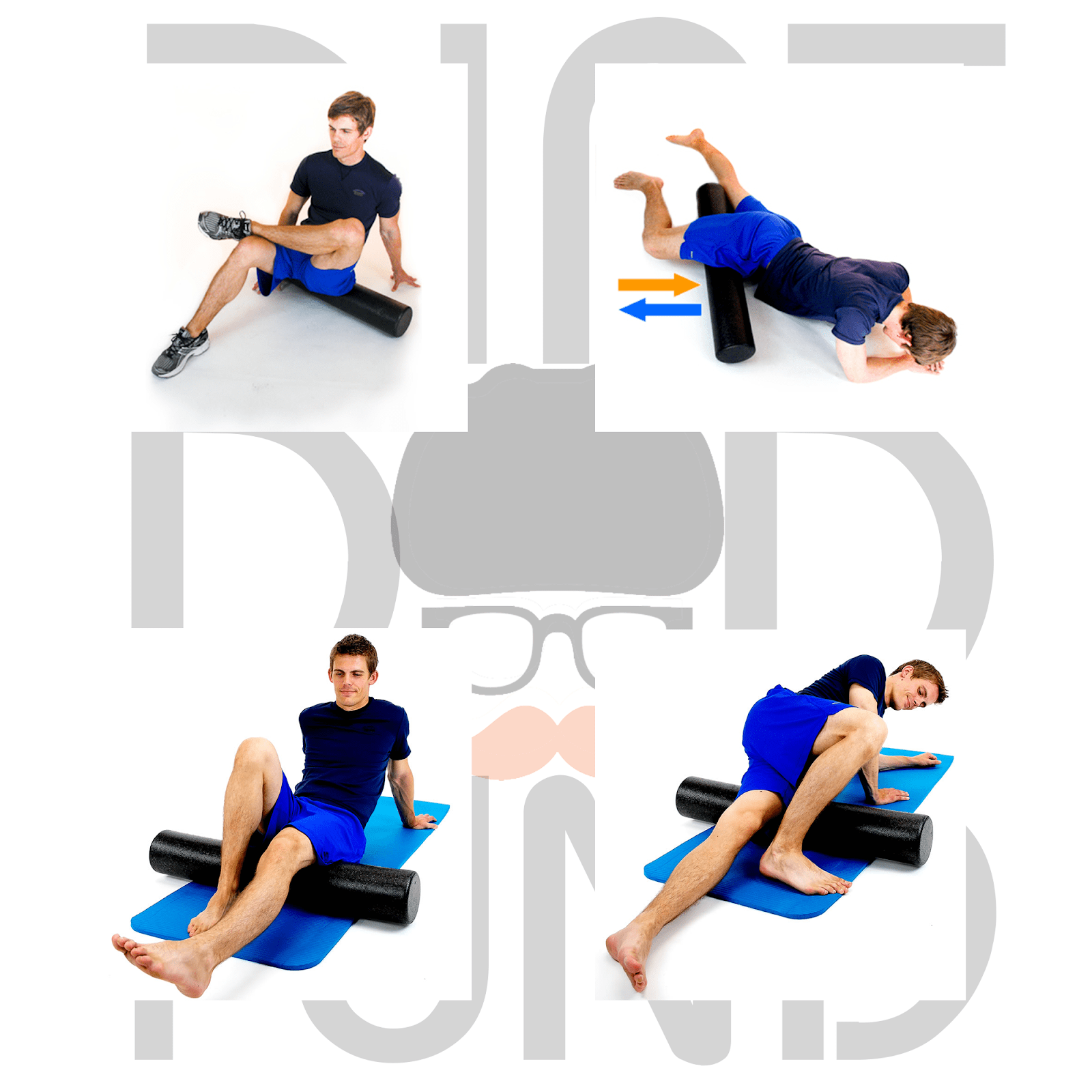
Step One: Perform a Foam Roll Routine
By rolling the muscles of your legs, they will be more relaxed making it easier to stretch, thereby improving your flexibility. In addition, when rolling the glute muscles the spasm which occurs due to being overworked will decrease too. Here’s how:
Step Two: Perform a Stretching Program
By adding hip flexor and hamstring stretches to your daily routine you can counteract the negative effects of prolonged periods in the saddle. Here’s how:
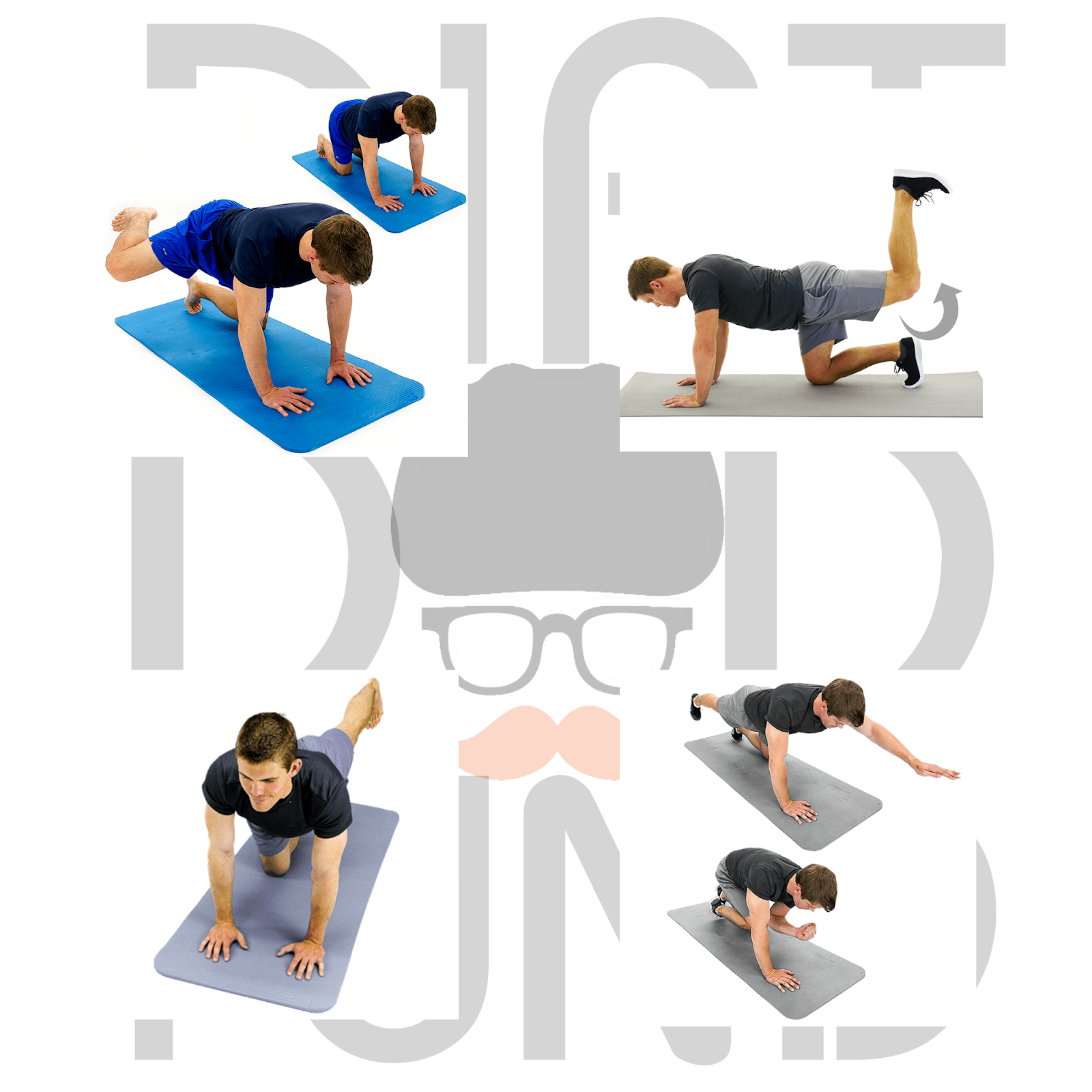
Step Three: Perform a Muscle Activation Routine
By performing a muscle activation program of your glutes prior to athletic activity, you can provide a stimulus to inactive muscle groups to facilitate their function. By focusing on the glute muscles and visualizing them to fire, the strength of contraction improves through enhanced fiber recruitment. Here’s how:
Muscle Activation Routines should be performed in the following way:
- Take it slow and controlled, making each repetition a maximal contraction through a full range of motion.
- Focus on concentrating on the muscles you intend to activate.
- Perform 8-10 repetitions and two sets of very little to no resistance.
- The key is to warm up and engage the proper muscles without pre-fatiguing them, which can make them less active.
Step Four: Perform a Strengthening Routine
A program created to improve and maintain the strength of the glutes, hip extensors, and core will prevent the negative side effects of DBS and improve performance. Here’s how:
Conclusion:
The glutes are arguably the most important cycling muscles, and the muscles most negatively impacted by prolonged periods spent bent over in the saddle.
In addition, all the sitting we do at work and home adds up, contributing to hip flexor tightness and elongation of our glutes.
This, in turn, results in glute muscles that ‘forget’ how to work and become ‘dead’.
By following the Four Step approach outlined above, you can awaken your tired tush and give your bum a boost!
Do you have pain in your hip when riding? Check out this virtual case study for tips on how to prevent and treat Hip Pain While Cycling previously posted on The ZOM!
How about you?
Have you ever experienced DBS? What did you do to resuscitate your rump? Your fellow virtual cyclists could use the help.
To subscribe to the Zommunique and receive more informative and entertaining articles like this one sent directly to your inbox, click here!
Semi-retired after more than 20 years as the owner and director of a private Orthopedic Physical Therapy practice, Chris now enjoys the freedom to dedicate himself to his passions—virtual cycling and writing.
Driven to give back to the sport that has enriched his life with countless experiences and relationships, he founded a non-profit organization, TheDIRTDadFund. In the summer of 2022, he rode 3,900 miles from San Francisco to his “Gain Cave” on Long Island, New York, raising support for his charity.
His passion for cycling shines through in his writing, which has been featured in prominent publications like Cycling Weekly, Cycling News, road.cc, Zwift Insider, Endurance.biz, and Bicycling. In 2024, he was on-site in Abu Dhabi, covering the first live, in-person UCI Cycling Esports World Championship.
His contributions to cycling esports have not gone unnoticed, with his work cited in multiple research papers exploring this evolving discipline. He sits alongside esteemed esports scientists as a member of the Virtual Sports Research Network and contributes to groundbreaking research exploring the new frontier of virtual physical sport. Chris co-hosts The Virtual Velo Podcast, too.


[…] learn more about this condition that affects many cyclists check out this article previously posted on The […]
[…] strengthening movements you can do at home, like the ones found in The ZOM article entitled “Dead Butt Syndrome—A Real Pain in the Cyclist’s A–.” However, nothing beats getting in the gym to do some squats, lunges, or hitting the leg […]