
Cycling Esports Platforms indieVelo and MyWhoosh are Taking Anti-Cheating Seriously: Shedding Light on a Dark Issue

indieVelo and MyWhoosh take responsibility for cycling esports anti-cheating with mandatory pre-certification, real-time flagging, and in-person verification.

Cycling-Esports-Platforms-indieVelo-and-MyWhoosh-Anti-Cheating
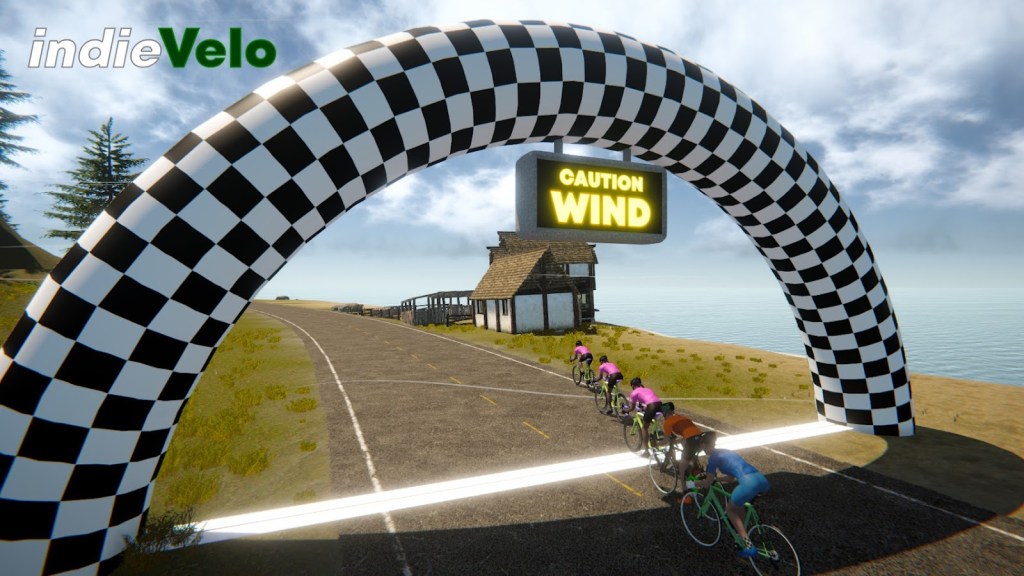
Photo: [Screenshot]: indieVelo

In an October 2023 study published in the journal Sports entitled “Perceptions of Cheating and Doping in E-Cycling,” the researchers asked almost 1,500 members of the virtual cycling community about cheating. A majority, forty-four percent, reported experiencing some form of cheating [40 percent reported “no” and the rest undecided] in online races, and 51 percent said it left them feeling angry or annoyed.  

Would you be annoyed? What if you felt the cycling esports platform wasn’t doing enough to identify and prevent cheating?

The teams behind cycling esports platforms indieVelo and MyWhoosh asked themselves the same question. Their answer is redefining the future of digital doping identification and prevention. 

Both platforms are built from the ground up with cycling esports in mind. As open beta-platform indieVelo’s developer, Dr. George Gilbert, emphasized publicly on several occasions, “Credibility needs to be part of the DNA of a platform, not something that you can effectively add retrospectively.”

When MyWhoosh came on the scene in 2019, their concept was similar. Unlike other platforms that use proprietary software engines, indieVelo and MyWhoosh chose the Unity Gaming Platform as their framework. Unity allows for straightforward coding that’s efficiently updated and access to a global workforce trained in the benchmark software.

Performance Verification Teams

In a recent interview for the Virtual Velo Podcast, Matt Smithson, MyWhoosh’s Race Control and Events Manager, said, “We have a BI and AI team of twelve people building the performance verification and other technical aspects.”

The team at indieVelo is less extensive, primarily the work of only one man, but his credentials and track record say that he’s the right man for the job. Gilbert, a Cambridge graduate, is the brains behind the global 911 emergency call system software. He is a UCI-trained commissaire, international cycling event organizer, and former Vice-Chairman of the Board of Directors of British Cycling.

Gilbert served as Chief Commissaire for multiple UCI Cycling Esports World Championships and is the former Chair of the Zwift Cycling Esports Commission. He brought on board Bjoern Ossenbrink, the former head of the Zwift Accuracy and Data Analysis team (ZADA), and the rest of the ZADA team to manage indieVelo’s performance verification service.

Photo: indieVelo

Game Architecture and DNA

Both platforms utilize a Server-Authoritative architecture, ensuring that every racer sees the same thing on their screen and that all race results are accurate.

In contrast, ensuring a uniform game state among all players poses a challenge in the Client-Side game architecture utilized by some platforms. Network latency can result in players perceiving varying versions of the game world simultaneously. Two players may observe each other in slightly different positions or share the same space, causing confusion and a sense of unfairness. 

The UCI had this to say after a similar scenario played out at the 2023 Olympic Esports series live cycling esports final.

“There are, of course, still areas of improvement, one example being finish line imagery. All parties involved in the event are constantly working on identifying improvements as this new discipline evolves. The UCI engages with platform providers and all other concerned stakeholders to ensure that full support is provided for this new discipline and that fair and credible racing is guaranteed for all athletes.”

The UCI awarded the hosting rights for the 2024 through 2026 Cycling Esports World Championships to MyWhoosh a few months later. indieVelo is the independent third-party performance verification and commissaire partner for the 23/24 Zwift Grand Prix, the platform’s elite level.

Both platforms require that all racers sync two power meters during high-profile events, indieVelo’s is for built-in dual recording. indieVelo utilizes proprietary encrypted protocols without manipulating the racer’s direct power source connection when connecting to the app.

Cycling esports platform MyWhoosh power passport performance verification
Photo: MyWhoosh

Pre-Race Verification

By linking the rider’s smart trainer as primary by default, indieVelo decreases the chance for foul play from more easily modified power meters. Double-embedded calibration for primary and secondary power sources enhances the authenticity. All is in place and active behind the scenes before the first avatar slides into the pen. 


Before any rider can register for a MyWhoosh Esports Cycling event, they must complete the MyWhoosh Power Passport. Rolled out in September 2023 with the updated ruleset V2.0.0, the comprehensive performance analysis creates a baseline power profile for comparison.

Riders must video-record themselves performing the MyWhoosh Power Passport Test. The video must include height and equipment assessment at the test’s start, followed by a weigh-in after its conclusion. The video must be continuous, covering all requirements in one take. 


indieVelo’s Gilbert is steadfast in ensuring transparency in the platform’s operations by utilizing algorithms to assess a racer’s every pedal stroke. 


During Episode 25 of the Virtual Velo Podcast, he explained, “It’s about recognizing what racers are truly capable of and painting a picture of an athlete’s physiology. I designed indieVelo from the ground up with the architecture in place to monitor, assess, and develop a data bank of authentic athletic ability.”


indieVelo’s proprietary data modeling understands each athlete’s physiology. It uses Critical Power (CP) and W’ models to create a digital fingerprint. These two metrics, monitored over time, create a unique signature for performance verification and comparison.

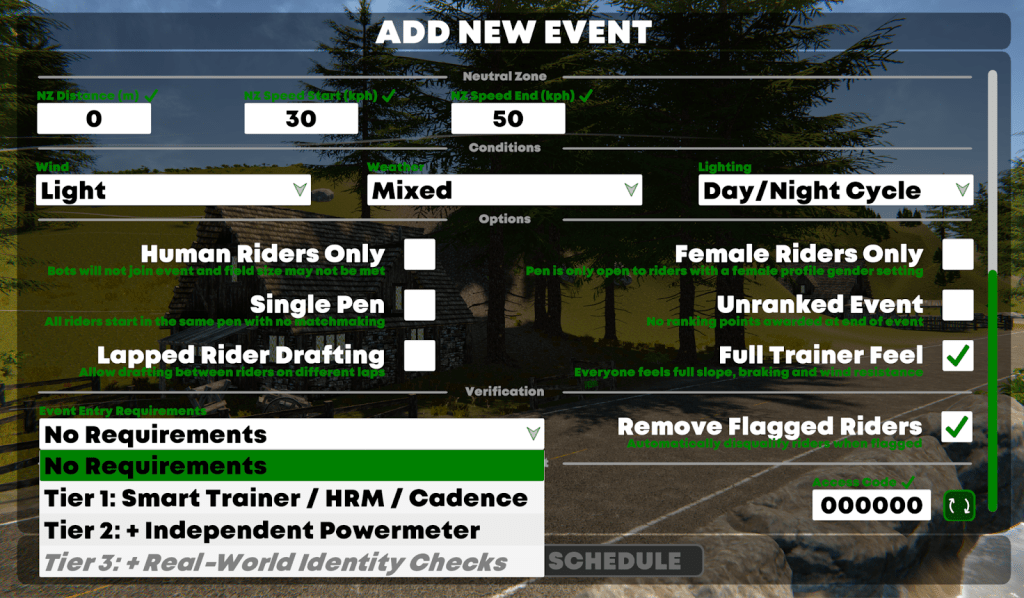
cycling esports Platform indieVelo performance verification hardware requirements
Photo [Screenshot]: indieVelo

Automatic Real-Time Flagging and Systematic Racer Disqualification

In the past, the cycling esports platform used a racer’s power profile data retroactively to identify performance inconsistencies. For many racers, it’s too late. The damage is already done by riders with faulty equipment or intent impacting the race and altering its outcome. 

indieVelo’s recent V0.2.23 game update sets a new standard for authenticity with live real-time performance verification. The groundbreaking innovation automatically flags and removes racers who intentionally cheat or provide unreliable or unrealistic data. 

So far, those ways include real-time performance verification checks for trainer control, power data anomalies, energy usage, excessive dropouts, and network manipulation.

In practical terms, riders are flagged and removed from races for pedaling styles inconsistent with real-world racing, like “sticky watts” and “sprint coasting.” Both terms broadly describe a rapid three to five-second power spike followed by a period of zero output meant to game the system for an unfair advantage. The algorithm also detects pedaling that is “too steady” to prevent the use of bots.

Performance that exceeds what is considered humanly possible or reasonable for a specific age range is also slated for real-time removal. As is data that excessively exceeds pre-recorded power profiles and heart rates. Dual recordings from the same source are also flagged.

The structure is in place on indieVelo for event organizers to institute these robust safeguards, along with minimum hardware restrictions and 100% trainer feel, and the list is growing. According to Gilbert, the framework is in place for the evolution of proactive performance verification, continually refining the algorithms and engaging added layers of authenticity. Once the protocol is fully secure very soon, all ranked events on the platform will feature real-time flagging.

Annulment and Live In-Person Verification

While MyWhoosh is not there yet, according to MyWhoosh representatives, that is the goal. 

“We now have the capacity to perform mid-race rider removal if suspected or caught cheating. However, we are still trialing and deciding on exact parameters, as in some cases, it may not be worthwhile to perform mid-race removal, whilst the annulment will follow in case of violation.”

The MyWhoosh performance verification team annuls approximately forty riders monthly during its marquis event, the Sunday Race Club. 

The platform has gained recognition for its high-stakes events, such as the Sunday Race Club series, offering a monthly prize purse exceeding $90,000 distributed across three categories, two genders, and team and individual classifications. The MyWhoosh Championship series in April 2023 set a new record in cycling esports, boasting the largest payout in its history with a staggering $1 million at stake.

cycling esports platform MyWhoosh Sunday race club
Photo: MyWhoosh

High Stakes Responsibility

The stakes are high. MyWhoosh feels obligated to take responsibility and is committed to getting it right. 


MyWhoosh is pioneering a bold and unprecedented move by requesting live verification at its headquarters. To date, over 20 riders have received invitations to participate in this process, with five athletes choosing to accept. These verifications have exposed several cases of fraud.


For instance, they asked a rider under suspicion to complete the final stage of the MyWhoosh Championship in person at MyWhoosh HQ. When this rider finished the course 23 minutes slower, exhibiting markedly lower performance and inconsistent data metrics, it confirmed suspicions that someone else had ridden on their behalf.

When frequent Sunday Race Club prize money winner Luca Zanasca received a real-world doping violation on October 7, 2023, MyWhoosh swiftly removed him from the series start list the following day. 


“When it comes to Mr. Zanasca’s status on MyWhoosh,” stated MyWhoosh representatives, “he has been waved from participating in our premium events. We do not tolerate doping, and we are taking a strong stance against it.”


Cycling esports is a burgeoning discipline, and with competition comes exciting innovation and daunting challenges. Maintaining identity is one of them. indieVelo requires racing licenses and real-world identity checks for their highest event tier. 


MyWhoosh also requires video recording and ID submission for the Power Passport. It reserves the right to request that athletes randomly livestream during an event if race control questions their identity. Neither is foolproof, but it’s a step in the right direction.

cycling esports platform MyWhoosh prioritizes performance verification
Photo: MyWhoosh

The Dark Side

Eliminating cheating in cycling esports will move the sport forward. However, cheating isn’t always sinister. Without intent, inconsistencies could be unwitting mistakes. Stringent verification checks root out faulty hardware and create learning opportunities. The sport has tremendous room for growth.


When platforms look the other way, fail to prioritize robust systematic anti-cheating protocols, don’t have the technological ability, or lack the motivation to identify and sanction cheaters, it forces the community to take justice into their own hands. 


Playful post-race banter deteriorates into a dark spiral of naming and shaming. The accused are put on the back foot and come out swinging in defense, while others retreat into the shadows. The self-policing breeds discontent and a toxic “dopogenic” environment that significantly impacts mental health and wellness. It’s the dark side of cycling esports, and on some platforms, there’s no light at the end of the tunnel. A house divided against itself will not stand.


As the authors of this 2021 review published in the International Journal of Esports and featured in Cycling News state, due to significant limitations to the policy and lackadaisical anti-cheating culture, [platforms] fall short when it comes to protecting the health and safety of riders, not to mention ensuring fairness and integrity across all cycling esports events.

An Obligation to Clear Expectations

All virtual cycling platforms are not obligated to prioritize stringent anti-cheating protocols, like indieVelo and MyWhoosh have. However, when that’s the case, those platforms forfeit the right to purport themselves as fair and equitable across the board.


Many multiplayer video games, like Fortnight, Overwatch, Call of Duty, and League of Legends, address this by offering competitive and non-competition modes. 


In multiplayer video games, competitive modes emphasize skill and strategy, where players vie against each other in a ranked setting that impacts their standing. These modes often include a matchmaking system for pairing players of similar abilities. Conversely, non-competitive modes prioritize collaboration, exploration, and casual play, creating a relaxed atmosphere with less focus on winning. This approach allows for a more leisurely and interactive gaming experience, free from the pressures of rankings or high-stakes outcomes.


indieVelo follows this model with ranked and unranked events that have varied equipment requirements, validation tiers, and dynamic skill-based matchmaking. MyWhoosh only requires the Power Passport for prize money events. The expectations must be clear.

Future Vision

IndieVelo and MyWhoosh are laying a solid foundation for progress by prioritizing credibility and genuine performance. Building this trust and authenticity is crucial for cycling esports to gain recognition and respect as a distinct discipline. 


All cycling esports platforms are responsible for establishing a benchmark for safety and credibility, eradicating circumstances that jeopardize competitors. It must take proactive steps to keep pace with the swiftly changing esports landscape, endorsing an inclusive digital doping policy enforced rigorously and meaningfully. 


Only through these actions can we ensure the prosperity of esports, spearhead the industry’s advancement, and eliminate the facilitators of doping and unsafe practices. By shining a light on the possibilities, responsibilities, and potential, we will enter the age of enlightenment for cycling esports.

To subscribe to the Zommunique and receive more informative and entertaining articles like this one sent directly to your inbox, click here!

Subscribe
Notify of
guest

0 Comments
Inline Feedbacks
View all comments

Latest Podcast!

Virtual Velo Podcast Ep. 88 Jason Osborne
Check out Episode 88 here!
UCI Cycling Esports World Championship LiveBlog
Click to join the fun!

Latest Posts!

Use code ZOMM50 at checkout for $50 off your Velocity Rocker Plate order exclusively for our followers!

Wahoo Run Smart Treadmill
Click the image to be one of the first to get the revolutionary Wahoo Run Smart Treadmill!
Zwift ride frame
Click for complete line of Zwift Bikes!

Do you want to join the VVN team? Tap the logo for details!

The Zommunique’ Community gets 10% off at LEVELVelo.com with coupon code “TheZomm gives 10% off”   

Broadcast Partner to The Virtual Velo Network!

The DIRT Dad Fund

Contribute to a great cause!

The DIRT Dad Fund

Share the power of The DIRT Effect

Click to see the full Zwift product line!

Jaclyn Long, MFT

Certified Yoga & Mindfulness Teacher

Marriage & Family Therapist in CA

Sports Anxiety Therapy

Purchase your Zwift Play controllers here!

0
Would love your thoughts, please comment.x
()
x
The Zommunique
Privacy Overview

This website uses cookies so that we can provide you with the best user experience possible. Cookie information is stored in your browser and performs functions such as recognising you when you return to our website and helping our team to understand which sections of the website you find most interesting and useful.