
The approach to Rider Weight and Interpreting Effort in indieVelo is unlike what you'll find on other virtual platforms, and for good reason.
Need help finding the w/kg numbers you’ve grown accustomed to on other platforms? You won’t find them on indieVelo. Rest assured. They’re working hard behind the scenes in the game’s speed algorithms.
indieVelo has consciously decided to refrain from showing you the other riders’ power-to-weight ratio (w/kg). There are two main reasons for this choice:
Firstly, indieVelo promotes a healthy cycling community and the sport’s growth. While a rider’s weight is essential in determining their in-game avatar speed, there’s no real benefit in sharing this information publicly with everyone. Too much emphasis on weight can potentially create unhealthy perceptions and behaviors among individuals, which isn’t good for the community or the growth of the sport.
Secondly, indieVelo believes that sharing an overload of performance data can take away from the genuine enjoyment and essence of the sport. Most people find natural, instinctual racing more engaging and fun than making decisions based on numbers in a data chart.
Instead, indieVelo shares data that mirrors what you’d experience in a real-world race. You get to see how fast other riders compare to you, and you can gauge their physical effort level, i.e., if they’re taking it easy, putting in some work, or going full gas in a sprint. This approach keeps the game experience immersive, exciting, and authentic.
Displaying Relative Speed
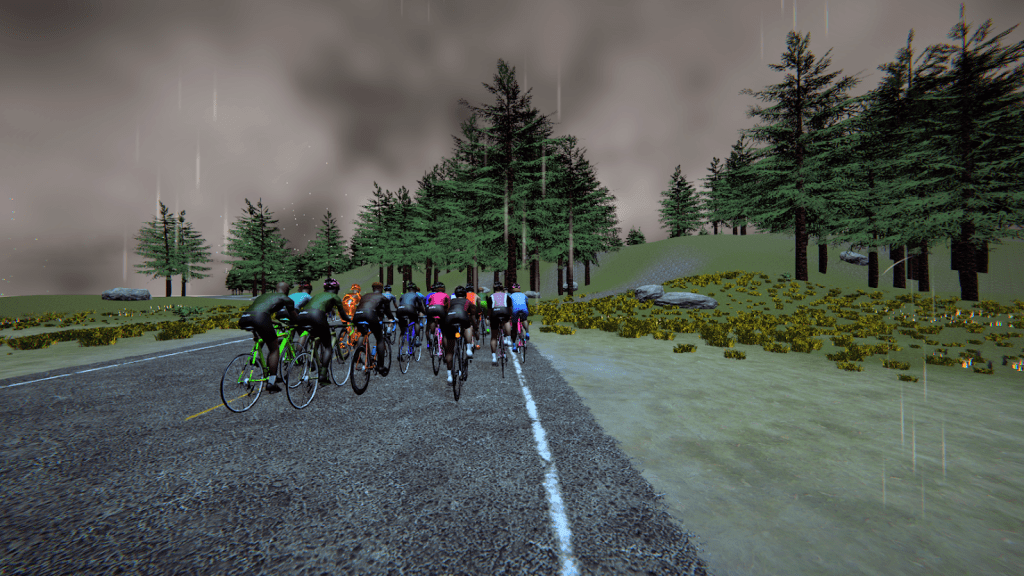
In indieVelo, you can quickly tell the relative speed of other riders by observing their movement compared to yours on the screen.
We know that in real-life cycling, you get additional cues, like peripheral vision, sounds, and the ability to glance around and observe others. Since a digital platform can’t accurately replicate these aspects, indieVelo provides a solution to enhance your gaming experience.
indieVelo compensates for this by clearly showing all riders’ speeds in the “nearest riders'” list. The feature allows you to quickly assess whether you’re catching up or falling behind groups of riders ahead or behind you. In real-world cycling events, this is information you’d also have. It helps make your virtual riding experience more realistic and engaging, giving you a better sense of your competition and your performance in the virtual world.
Also Read: How-to-Guide-Keyboard Shortcuts
Displaying Relative Effort
Judging the effort of other riders can be challenging in online racing. It is especially true compared to outdoor racing, where subtle signs like breathing or body posture changes serve as indicators that are tough to mirror in a virtual setting.
indieVelo does its best to simulate these changes in body position, but racers need more. Through testing, indieVelo found that races become more strategically interesting by displaying Relative Effort related to a racer’s Critical Power (CP).
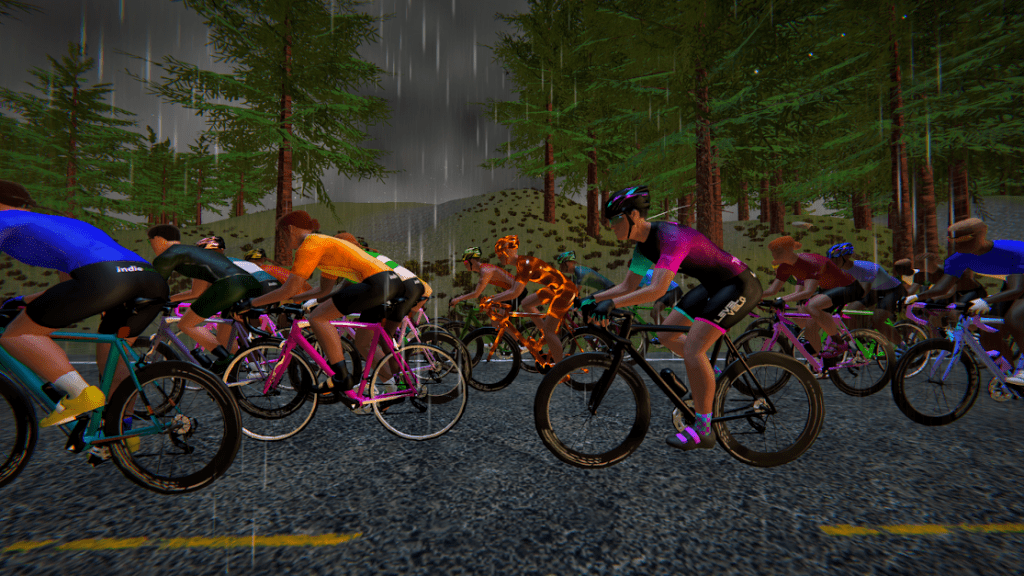
indieVelo indicates Relative Effort in two ways:
- In the ‘nearest riders’ list.
- On a small light attached to each rider’s seat post.
Here’s how to interpret the light:
- If a rider is cruising easily, the light will be a dark red.
- As the rider puts in more effort, the light will turn on and shift through shades of amber.
- If a rider is working really hard, the light will gradually change to various shades of green, ultimately glowing bright green.
Each rider can fully customize their color choices to suit individual preferences and ensure enjoyable and easily understandable gameplay.
Also Read: How-to-Guide-Pacebots
Check out indieVelo—How-to-Guides for more helpful tips and tricks!
Semi-retired after more than 20 years as the owner and director of a private Orthopedic Physical Therapy practice, Chris now enjoys the freedom to dedicate himself to his passions—virtual cycling and writing.
Driven to give back to the sport that has enriched his life with countless experiences and relationships, he founded a non-profit organization, TheDIRTDadFund. In the summer of 2022, he rode 3,900 miles from San Francisco to his “Gain Cave” on Long Island, New York, raising support for his charity.
His passion for cycling shines through in his writing, which has been featured in prominent publications like Cycling Weekly, Cycling News, road.cc, Zwift Insider, Endurance.biz, and Bicycling. In 2024, he was on-site in Abu Dhabi, covering the first live, in-person UCI Cycling Esports World Championship.
His contributions to cycling esports have not gone unnoticed, with his work cited in multiple research papers exploring this evolving discipline. He sits alongside esteemed esports scientists as a member of the Virtual Sports Research Network and contributes to groundbreaking research exploring the new frontier of virtual physical sport. Chris co-hosts The Virtual Velo Podcast, too.