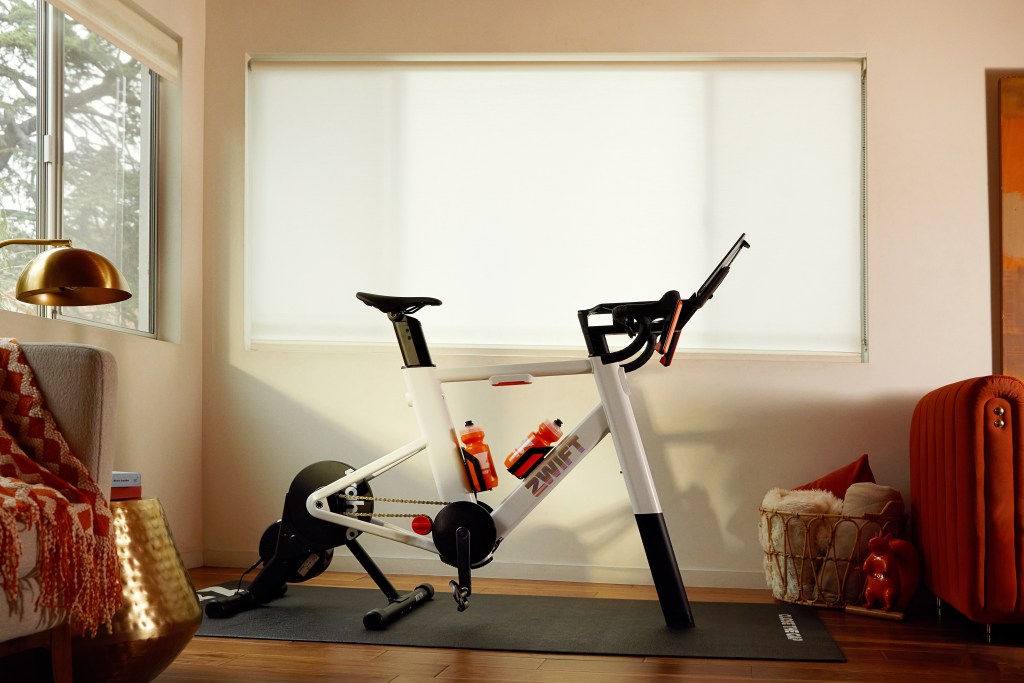
The Zwift Tron bike symbolizes Adam Wiegandt's recovery from a year of post-COVID desperation and hopelessness.
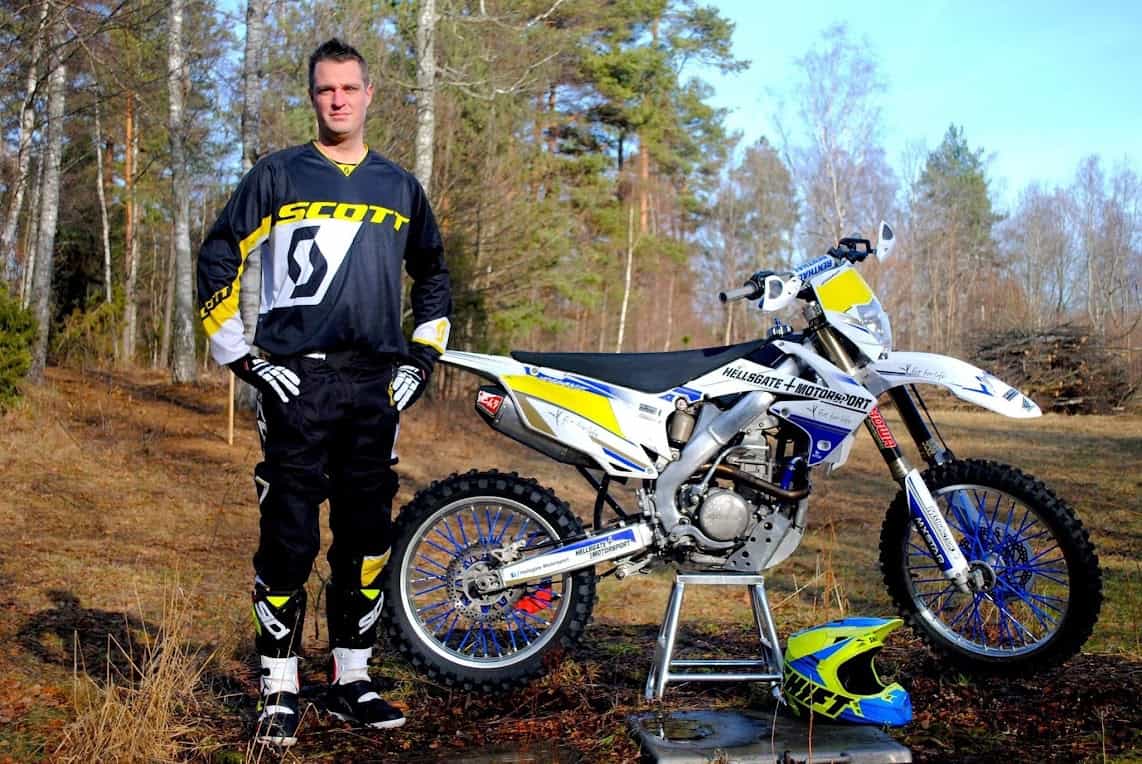
Adam Wiegandt’s life began on two wheels. The thirty-six-year-old, born and raised in Sweden, raced Enduro Motocross from age four until a back injury forced him from the sport five years ago. It was his life and who he was. His father had a small shop that sold bikes. It was in his blood.


“I have always enjoyed training as this has been a major part of my life since childhood,” Adam explains, and “I never did drugs, alcohol, smoking, or anything, and a bit of trail and bike riding and running for fitness.”
Adam’s Zwift story began around Christmas-time of 2020. The injury prevented him from training for Enduro, and Adam grew increasingly intolerant to the cold and darkness of harsh Swedish winters. He was going to the gym but wanted something more when he put his Enduro-life behind him.
“I bought a “dumb-spin bike” and tried it at home,” he admits, “But it just sucked. I got bored after 5 minutes of staring at the wall just listening to music.”
The Gift of Zwift
One day, he noticed a Swedish Champion MTBer posting a Zwift training image on social media. Adam became curious, messaged the rider, Jakob Björklund, an elite Zwifter who presently races for Team Swedish Zwifters, and they discussed the possibilities.
“To train and race from home with provided data and be competitive with other people online?” he asks hypothetically, “For sure, it got my attention, and it sounded too good to be true.”
Also Read:
His mildly obsessive personality found him engrossed in research, reading the forums, and learning all he could about this discovery—Zwift. After a few days of burrowing the rabbit hole, he bought a road bike, a smart trainer, and an ATV unit.
“It was like a drug to me, and the competitive monster inside me again woke. I wish Zwift would have been around sooner in my carrier because this would have helped me in a totally new way with my fitness,” he shares. “It was like having a personal trainer at home every day.”
COVID Strikes Hard
The social aspect was like having a support group that helped him get up to speed. He joined the Zwift Team Swedish Zwift Riders and soaked in as much information as possible. Then COVID struck the world, and the world reacted.
Sweden responded differently than other countries, with no mandated lockdowns, and instituted social preventative measures instead. Adam did his best to follow social distancing and wear a mask. “But I was still young and healthy,” he says, “and the mindset of Swedish people was: Covid only affected older people. Please don’t talk about it. It’s only a bad cold. It was taboo.” Work and public safety protocols were shunned, and colleagues laughed at the suggestion.
One night in early January 2021, after a Zwift group ride earlier that evening, he awoke unable to breathe. He never had any pulmonary issues, and COVID was the first thing that entered his mind. He knew what it was.
His suspicion was confirmed a few hours later when a call from HR at his job told him there was an infection and urged him to go for testing. Still suffering shortness of breath, Adam immediately went to the hospital, and the test returned positive. There was no room for him, and he was sent home with an inhaler and advised that the problem would pass in time. It was the routine accepted treatment in Swedish hospitals.
I lay in the shower for almost two days as the hot steam helped me breathe easier,” he recalls the frightening moments, “Moving around was extremely painful, and I felt like I was 90.”
Bedridden and Beaten Down
He was bedridden for two weeks before becoming fed up with his condition and decided to return to his job. Within two days, he collapsed at work, and they rushed him to the hospital. Adam doesn’t remember much of that time. He experienced severe memory loss and brain fog.
“I did understand that something was terribly wrong because my brain didn’t function as it should. I had severe memory loss and gaps. They tested my blood oxygen levels at 92%, and my heart rate was 165-170 bpm just sitting—(my max bpm is 205),” he shares.
He was sent home again without any answers or assurances and was bedbound for eight more weeks. It was a struggle to get up to go to the bathroom. Adam had never heard of Post-COVID syndrome, but he was about to find out.
After several more weeks without progress and continued deterioration in his strength and cognition, Adam returned to the hospital for further testing. They treated him like a patient with COPD (Chronic Obstructive Pulmonary Disease) —like he was a lifelong smoker—because his case was like nothing they’d seen before, and he became more scared. An MRI revealed residual scarring in his COVID-ravaged lungs.
“I had to breathe through different tubes to increase my lung function,” he recalls the desperation. “I was 35 years old and thought this was it. My life is over.”
Months of Hopelessness
The hopelessness grew when nothing seemed to help. Adam’s doctors also felt desperation and decided to accelerate the treatment plan. They hooked him to a heart rate monitor and blood oxygen sensors and put him on a spin bike to gather more data.
After riding for five minutes, his body crashed. He had severe chest pain, his heart rate spiked, and his blood oxygen plummeted. “I just sat there soaked in sweat, crying in a total mental breakdown. We tried the same method several times over the upcoming weeks. Always the same results. Will this be the end?” he asked himself.
He also began to question his healthcare. The doctors had no plan or proven rehabilitation protocol to fix him. Adam grew frustrated with few favorable options but had an idea. He suggested Zwift, explained how it worked, and his doctor was impressed by the available data. They agreed it was a better solution than the hospital could provide and decided to move forward.
Adam set out to create a personal post-COVID pulmonary rehabilitation protocol using Zwift. He monitored his blood oxygen and heart rate as a function of power output in a controlled manner, slowly increasing each week according to tolerance and perceived exertion.
Zwift Was the Protocol For Despair
His improvement wasn’t steady, but it was positive. Some days were terrible, and his lungs couldn’t withstand low-intensity pedaling. Other days were better, and his performance improved over time. He communicated the data he collected with his doctors, and they were astounded by the progress.
“I remember the first time I completed a group ride in the D-class for 60 minutes with 2.0w/kg max,” he recalls the sense of hope. “I just sat on the bike and cried for joy, totally soaked.” There is a way this will turn out well, he thought.
He continued, embraced the small victories, and steadily increased the push. It was the right decision. After following his Zwift pulmonary rehab protocol for several months, his strength and stamina returned, and he felt great.
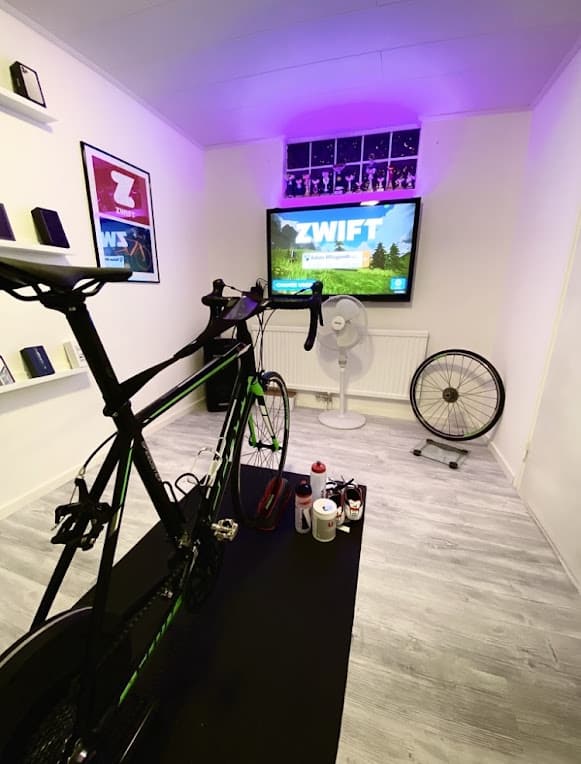
“I always wanted the Tron bike,” Adam explains. “Both for the looks and what it stood for: You must earn it. You have to put in the work.” Now it meant even more to him. It was a sign that he was himself again and a reminder of the challenges he overcame with Zwift.
Zwift Saved My Life!
Adam recently completed the Tron Challenge and has the neon wheels in his garage to show for it. That’s not all!
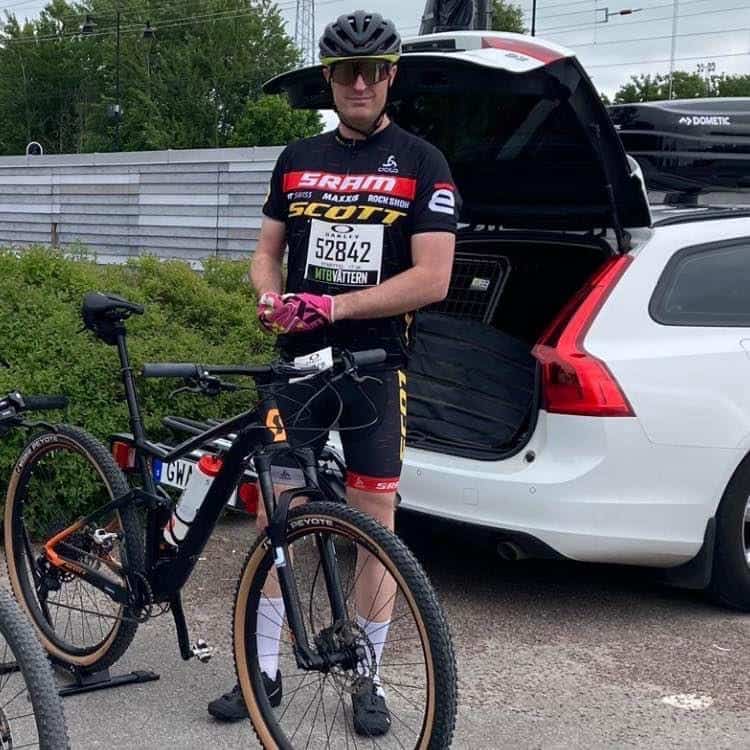
“Thanks to Zwift, it also got me into MTB Cross country racing. Tomorrow is the year’s first race, and I believe I’m In the best shape I have ever been.
My Zwift setup is always assembled and ready to go 24/7 all year. Zwift saved my life with the community pushing each other to be the best they can be. And for that, I am truly forever grateful.”
You’re not the only one, Adam!
Has Zwift had a significant impact on your life?
Comment below! Your fellow virtual cyclists want to know.
To subscribe to the Zommunique and receive more informative and entertaining articles like this one sent directly to your inbox, click here!
Semi-retired after more than 20 years as the owner and director of a private Orthopedic Physical Therapy practice, Chris now enjoys the freedom to dedicate himself to his passions—virtual cycling and writing.
Driven to give back to the sport that has enriched his life with countless experiences and relationships, he founded a non-profit organization, TheDIRTDadFund. In the summer of 2022, he rode 3,900 miles from San Francisco to his “Gain Cave” on Long Island, New York, raising support for his charity.
His passion for cycling shines through in his writing, which has been featured in prominent publications like Cycling Weekly, Cycling News, road.cc, Zwift Insider, Endurance.biz, and Bicycling. In 2024, he was on-site in Abu Dhabi, covering the first live, in-person UCI Cycling Esports World Championship.
His contributions to cycling esports have not gone unnoticed, with his work cited in multiple research papers exploring this evolving discipline. He sits alongside esteemed esports scientists as a member of the Virtual Sports Research Network and contributes to groundbreaking research exploring the new frontier of virtual physical sport. Chris co-hosts The Virtual Velo Podcast, too.