Two Esports Researchers seek to uncover the intrinsic motivations driving virtual athletes to push the boundaries of safety and fair play.
As virtual cycling grows as a fitness and training tool and cycling esports struggles to establish itself as a distinct discipline, a burgeoning scientific community is stepping in to explore the critical questions—why we do what we do and how we can improve it.
Newcastle University’s Dr. Andrew Richardson said in the October 2023 study Perceptions of Cheating and Doping in E-Cycling, “We believe our findings relate to the experiences of all community members, from the typical e-cyclist to the elite e-racer who uses the platform, especially when discussing what the community wants regarding bans for cheaters when caught.”
His team questioned the culture of cheating in virtual cycling, as noted in a 2021 review published in the International Journal of Esports and featured in Cycling News, challenging the limitations in policies and a lackadaisical approach to anti-cheating culture, suggesting that the platforms fall short of creating a perception of honesty and fair play, as well as ensuring fairness and integrity in all cycling esports events.
Dr. Bryce Dyer is Associate Professor of Sports Technology at Bournemouth University. Dr. Dyer publishes widely on the topic of performance enhancement in sports. He recently wrote a chapter on virtual cycling exploring the impact of technology, cheating, and performance enhancement in cycling esports for the 2022 book “Social Issues In Esports.”
In recent research, Dyer explored the nuanced topic of weight doping in virtual cycling.
“I would argue that some online cycling platforms have been slow (intentionally or otherwise) to address the issues surrounding weight or height data manipulation.
The purpose of this research is to draw attention to this to try and better understand from the user’s perceptions of what they think is going on and determine their behavior and what they feel is appropriate,” stated Dr. Bryce Dyer, co-author of the December 2023 paper An Investigation Into the Attitudes of Virtual Cycling Participants Regarding Avatar Bodyweight Manipulation and Weight Doping.
Richardson and Dyer are teaming up and plea to the virtual cycling community for help shedding light on the intrinsic motivations that drive athletes to push the envelope of fairness and safety:
“Esport researchers Dr. Bryce Dyer and Dr. Andrew Richardson would like to invite riders who currently race when using indoor cycling racing apps (such as Zwift, Rouvy, Trainingpeaks Virtual, etc) to complete a short questionnaire to ask about how far they would go to be successful in the sport.
The 10-item questionnaire will only take 1-2 minutes to complete. We’re looking forward to your response.”
Please find the link to the questionnaire here.
Semi-retired after more than 20 years as the owner and director of a private Orthopedic Physical Therapy practice, Chris now enjoys the freedom to dedicate himself to his passions—virtual cycling and writing.
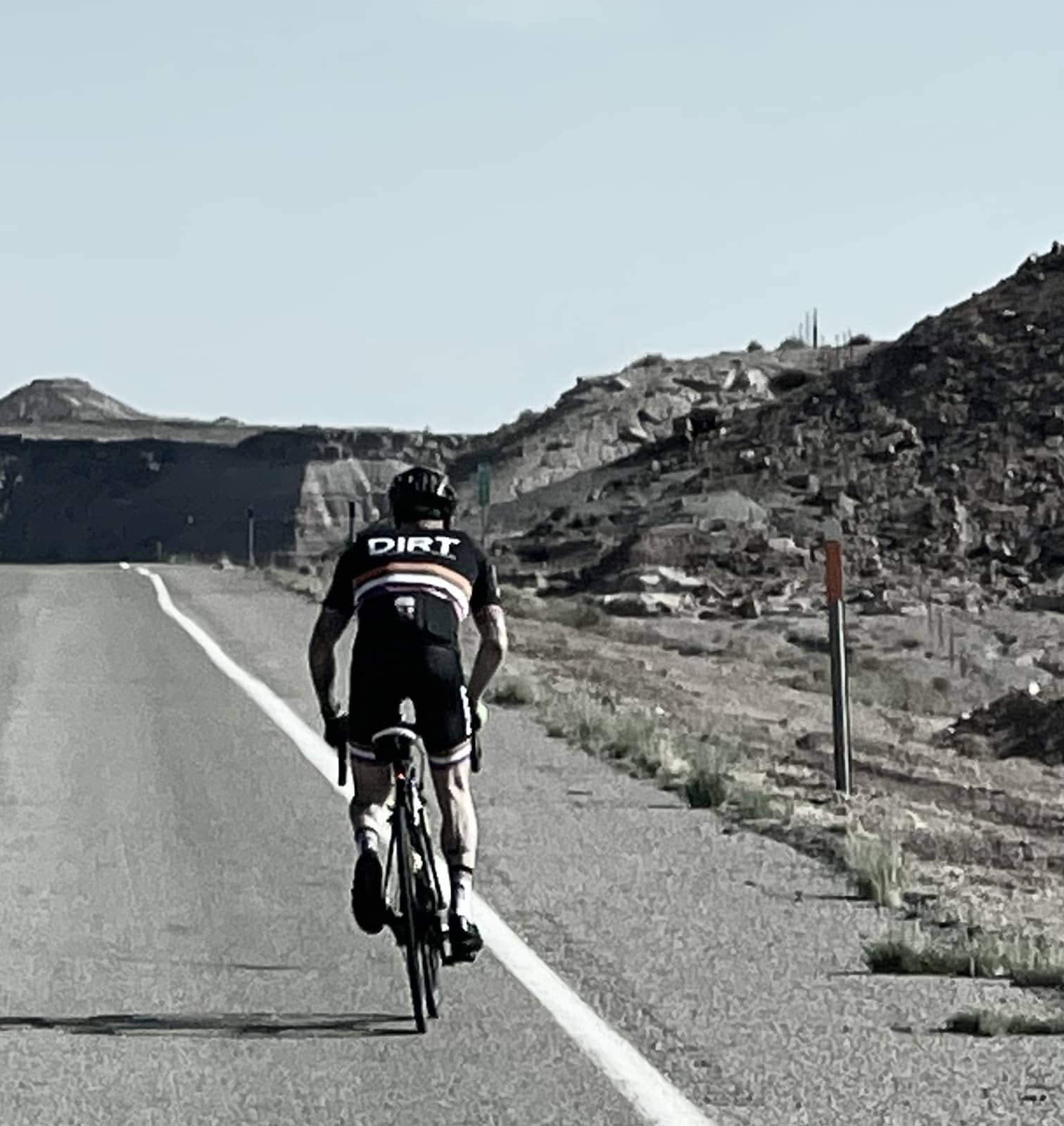
Driven to give back to the sport that has enriched his life with countless experiences and relationships, he founded a non-profit organization, TheDIRTDadFund. In the summer of 2022, he rode 3,900 miles from San Francisco to his “Gain Cave” on Long Island, New York, raising support for his charity.
His passion for cycling shines through in his writing, which has been featured in prominent publications like Cycling Weekly, Cycling News, road.cc, Zwift Insider, Endurance.biz, and Bicycling. In 2024, he was on-site in Abu Dhabi, covering the first live, in-person UCI Cycling Esports World Championship.
His contributions to cycling esports have not gone unnoticed, with his work cited in multiple research papers exploring this evolving discipline. He sits alongside esteemed esports scientists as a member of the Virtual Sports Research Network and contributes to groundbreaking research exploring the new frontier of virtual physical sport. Chris co-hosts The Virtual Velo Podcast, too.