by Nile Battey
In this interview, cyclist Illi Gardner details her preparation for the Zwift Games Climb Championship and what it takes to bag the most Strava climbing QOMs in the world.
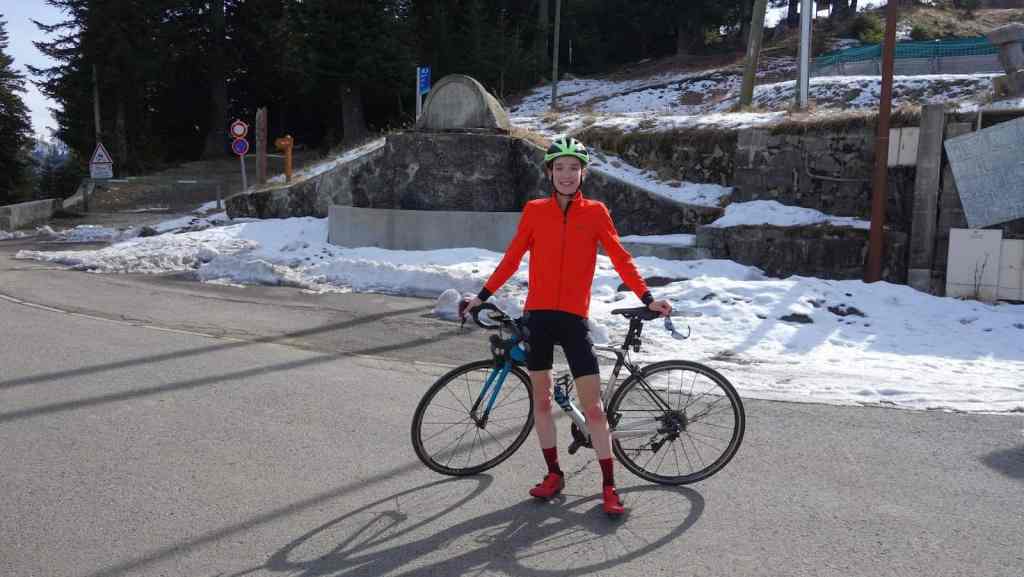
Professional British cyclist Illi Gardner excels and is one of the best in the world when the roads pitch skywards. She established the Everesting World record in 2021 and surpassed her own achievement in 2022, completing it in an impressive 8 hours and 33 minutes.
With over 8,000 Strava QOMs on climbs—the most of any rider, male or female—to her name, Gardner holds titles as both the European and British Hill Climb champion, and she recently clinched victory as the first-ever Zwift Games Climb Championship winner.
In an interview with The Zommunique contributor Nile Battey, Gardner delved into her unique training regimen tailored specifically for the Zwift Games. They explored how she leverages various virtual cycling platforms to enhance her real-world performance.
Gardner’s training methodology is intriguing, spanning from the lush lanes of South Wales to the challenging mountain roads of Watopia. We delve into the intricacies of her approach, aiming to unveil the secrets behind her climbing prowess.
Before delving into the details, you can read Gardner’s insightful 2022 interview with The Zommunique, where she discusses her journey into cycling and the transition to cycling esports.
Let's start with the basics. When did you focus on targeted and structured training for cycling and climbing?
I’ve been training specifically for cycling since 2017. Although I started out road racing, I soon found more fun in climbing-specific competitions.
So you were relatively late to start your cycling career. Do you currently, or did you ever have a coach to help guide your training?
I’m self-coached although “coaching” sounds a bit too formal, as I don’t tend to lay out my training in a very structured way. I really enjoy having the ability to adapt training around day-to-day life and I’ve managed to maintain a high level of motivation so currently, it’s working very well.
I’ve had a couple of coaches in the past and found that it took some of the joy out of riding for me. Having said that, I imagine I was a very annoying person to coach as I had the tendency to scrap my training plan and just go and ride hard up some hills instead.
Okay, brilliant. Now that we know a bit about your training background, can you shed some light on how a competitive season of racing and training looks for you?
To be honest, my season structure has been a bit all over the place in the last few years. I’m still trying to figure out where my future lies in cycling as it is just a hobby.
I never really have an ‘off-season’, but my training does vary throughout the year. The winter is basically just lots of indoor riding. Then over the summer, I do longer mountainous rides (coinciding with trips to France). Finally, as autumn approaches, I start focusing on short efforts ahead of the British hill climb season.
Looking back at 2023 I averaged around 12 hrs/week in the winter and spring, then it jumped to around 15 in the summer before dropping to 10 in the autumn. The intensity is kept high all year round, mainly because that’s what I enjoy!
It’s a stark contrast to my road racing days when I’d average 15-20 hours/week, much of which was just boring easy miles. I have no desire to go back to that kind of training!
I think it's fair to say that your performance on the slopes of Alpe du Zwift in the 2024 Zwift Games Climb Championship was utterly dominant. With an official time of 37:16, you gapped the field almost immediately, winning by a margin of 1 minute 35 seconds.
How did you go about training for an effort like this?
To be honest, my training for The Zwift Games was a bit unorthodox. I was actually in France for the month prior, without access to a turbo trainer. But I did lots of long efforts on actual mountains, which proved to be fantastic preparation.
GCN caught up with Illi on one of her 2023 excursions to France when she attempted to break the world record on the legendary Col du Tourmalet, which you can find in this video.
Do you make any cycling esports-specific training modifications for an event such as the Zwift Games Climb Championship?
Throughout the winter I did lots of similar long efforts on virtual platforms. I used Rouvy a lot as I found it engaging to ride IRL climbs such as the Angliru and Zoncolan. However, the biggest change I made, whilst training for The Zwift Games was always riding on 100% trainer difficulty.
The ability to actually feel the change in gradient and anticipate when you’ll need to shift gears or vary cadence to compensate for fluctuations in power.
In this brilliantly produced video on her YouTube channel, Gardner investigates the accuracy of climbing speeds, gradient changes, and effective watts per kilogram rations of multiple virtual cycling platforms.
Find Illi’s YouTube by clicking here!
What did the week leading into The Zwift Games Climb Championship look like for you and what was your race strategy and mindset on the start line?
My plan was to treat it like a TT solo effort as this is better for me! The toughest gradients come in the first couple of kilometers so I planned to set off hard and hopefully shake down any tactics that other teams might have been trying to employ, then assess how things were going after a few minutes.
The week before the race I did a hard hill effort pretty much every day (utilizing Zwift’s Climb Portals and the first, steeper kilometers of Alpe du Zwift) doing lots of hard efforts while fatigued made the actual race effort feel relatively ‘good’ as I was mentally prepared for grinding out a long effort (along with being a bit more rested on the day!)
It’s also easy to get carried away when you’re pumped up with nerves and excitement, but I managed to keep it under control and settle into a good rhythm.
This fascinating preparation style allowed Illi to average 252 watts for the duration of her ascent of Alpe Du Zwift, which equates to a mind-blowing 5.8 watts per kilogram.
Thank you so much for sharing some of the training secrets. Before we finish, what is the key training philosophy or piece of advice that you stand by or would offer to someone else?
There are a lot of trendy training philosophies that pop up all the time but ultimately it’s a very individual thing. It sounds silly and obvious but you have to enjoy what you’re doing if you want to maintain motivation and motivation/passion is what will encourage you to train which will lead to greater fitness.
Simple yet excellent advice, Illi! I wish you all the best with whatever your next target is and hope to see that Golden Tron back to defend your title next year in the 2025 Zwift Games.

Nile is a dedicated athlete who competes indoors for the elite Restart Racing p/b Alex Coh squad. As an enthusiastic member of the cycling esports community, he dreams of one day representing Great Britain at the UCI Cycling Esports World Championships. Nile’s keen eye for the intricacies of cycling esports is undeniable.
Welcoming him onto The Zommunique’ team promises outstanding insights, analysis, and opinions. Nile’s perspective offers a valuable look into the evolving sport from an elite racer who represents the next generation of aspiring esports competitors.